
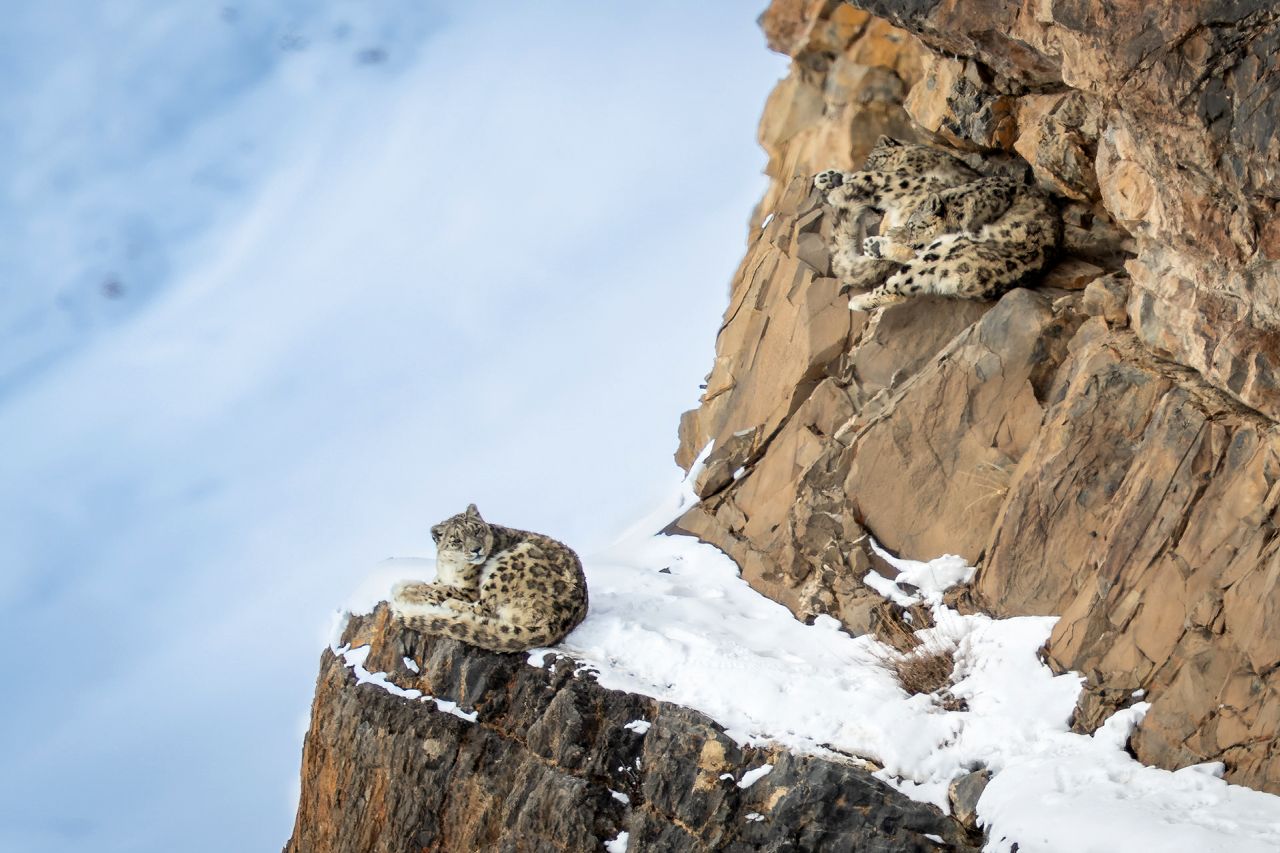
There are dreams that take root early and simply refuse to let go. Mine began in the seventh grade, the day I first learned that somewhere in the high, frozen folds of the Himalayas lived an animal so elusive that most people who search for it a lifetime never see one: the snow leopard.
My first real attempt came in 2023, in the village of Ulley in Ladakh. I stood in the snow-capped mountains for days and came away with nothing but tracks — paw prints in the snow, proof that the animal existed, that it had walked exactly where I now stood, and nothing more. I went back in March 2024, and this time luck was with me. I got my first photographs. That taste only sharpened the hunger.
So in the second week of February 2025, driven by that same old restlessness, a few of us set out from Chandigarh toward Spiti Valley — chasing the same dream, hoping this time to see the ghost of the mountains not as tracks in the snow, but face to face.
Day 1, Chandigarh-Sangla: The Journey Begins
Our first stop was Sangla, a small valley village cradled by snow-capped peaks that turned gold as the evening light hit them. Life here is simple, but the warmth in the smiles of the people felt like some kind of counterbalance against the cold mountain air.
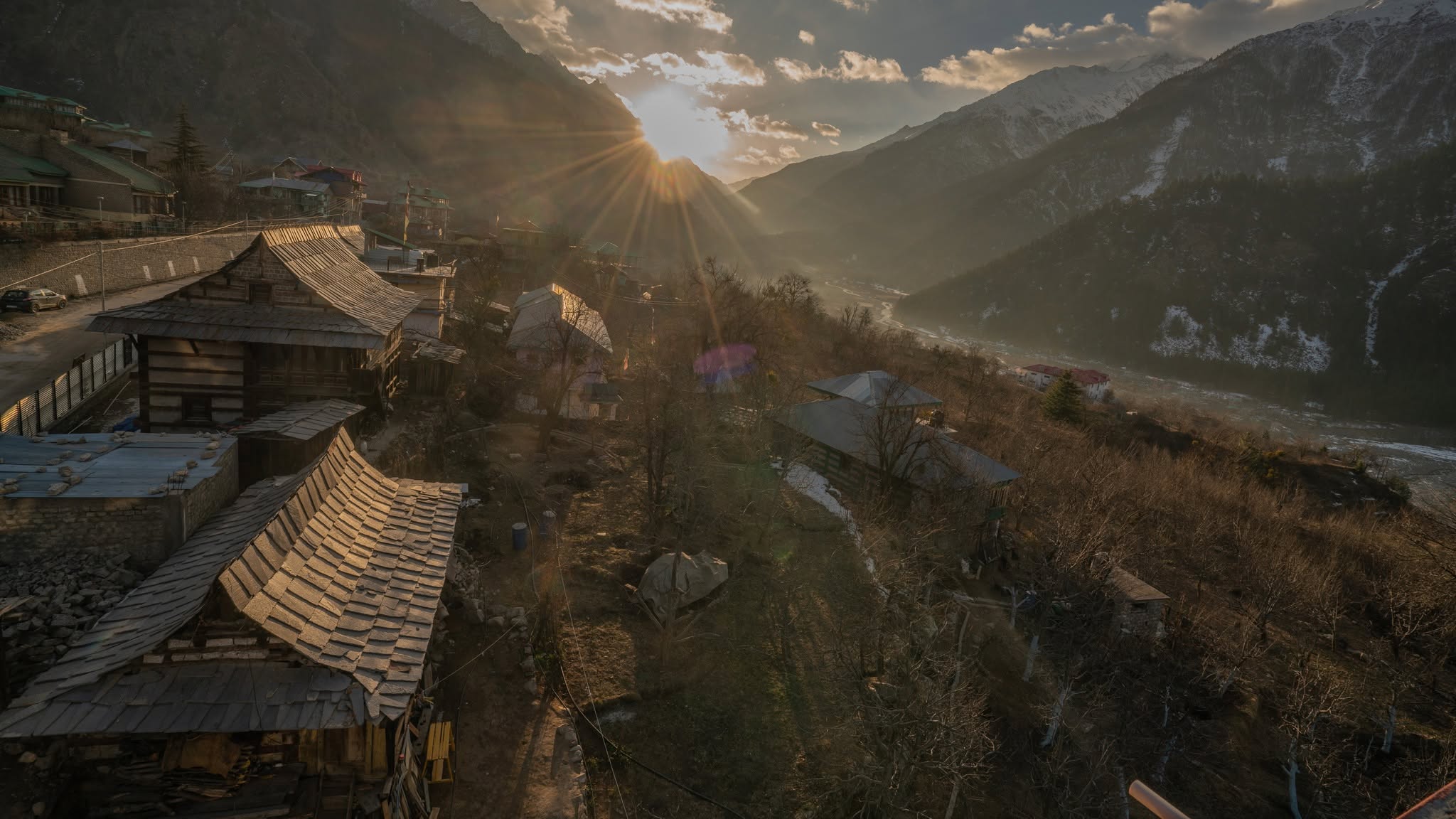
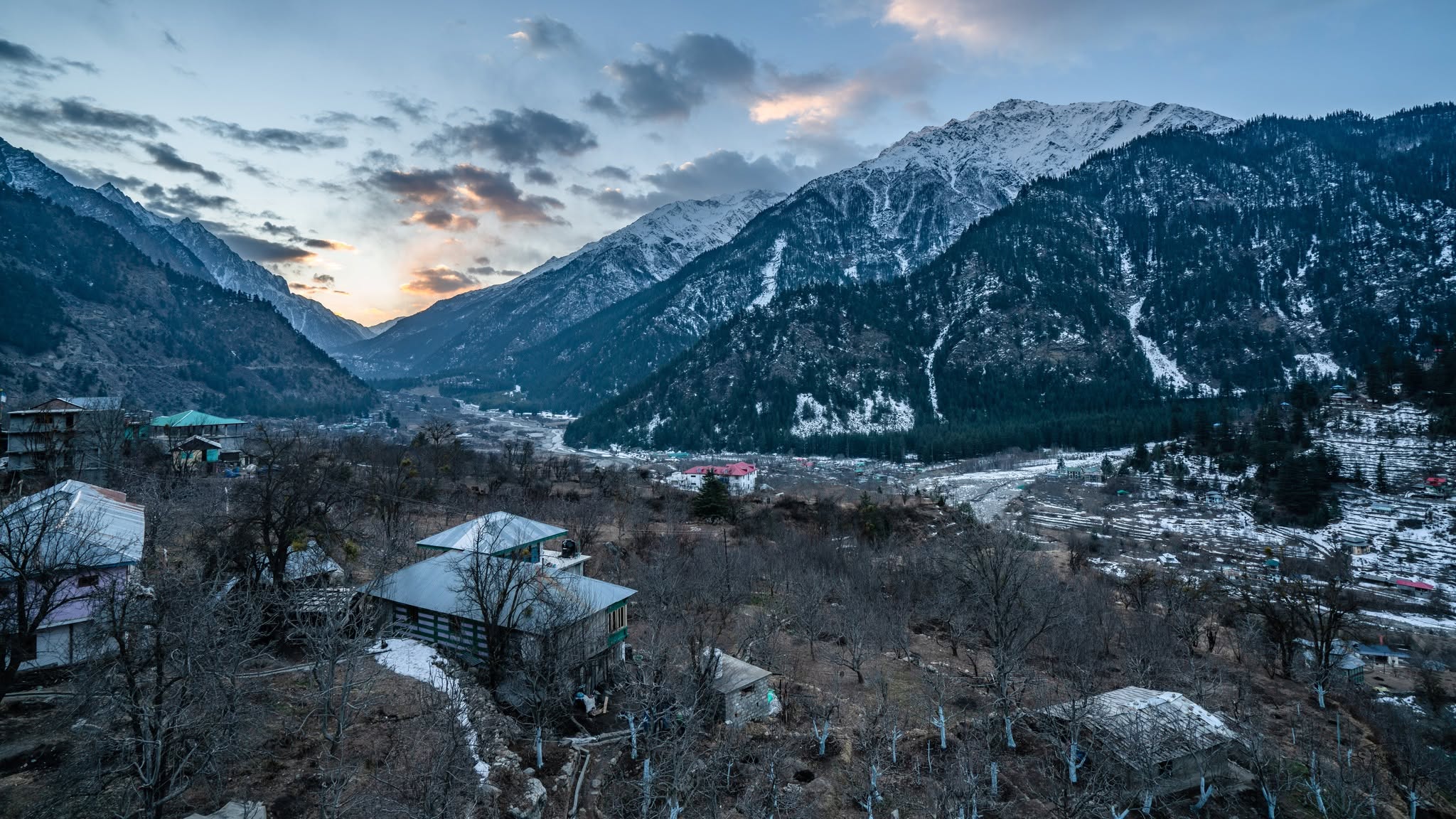
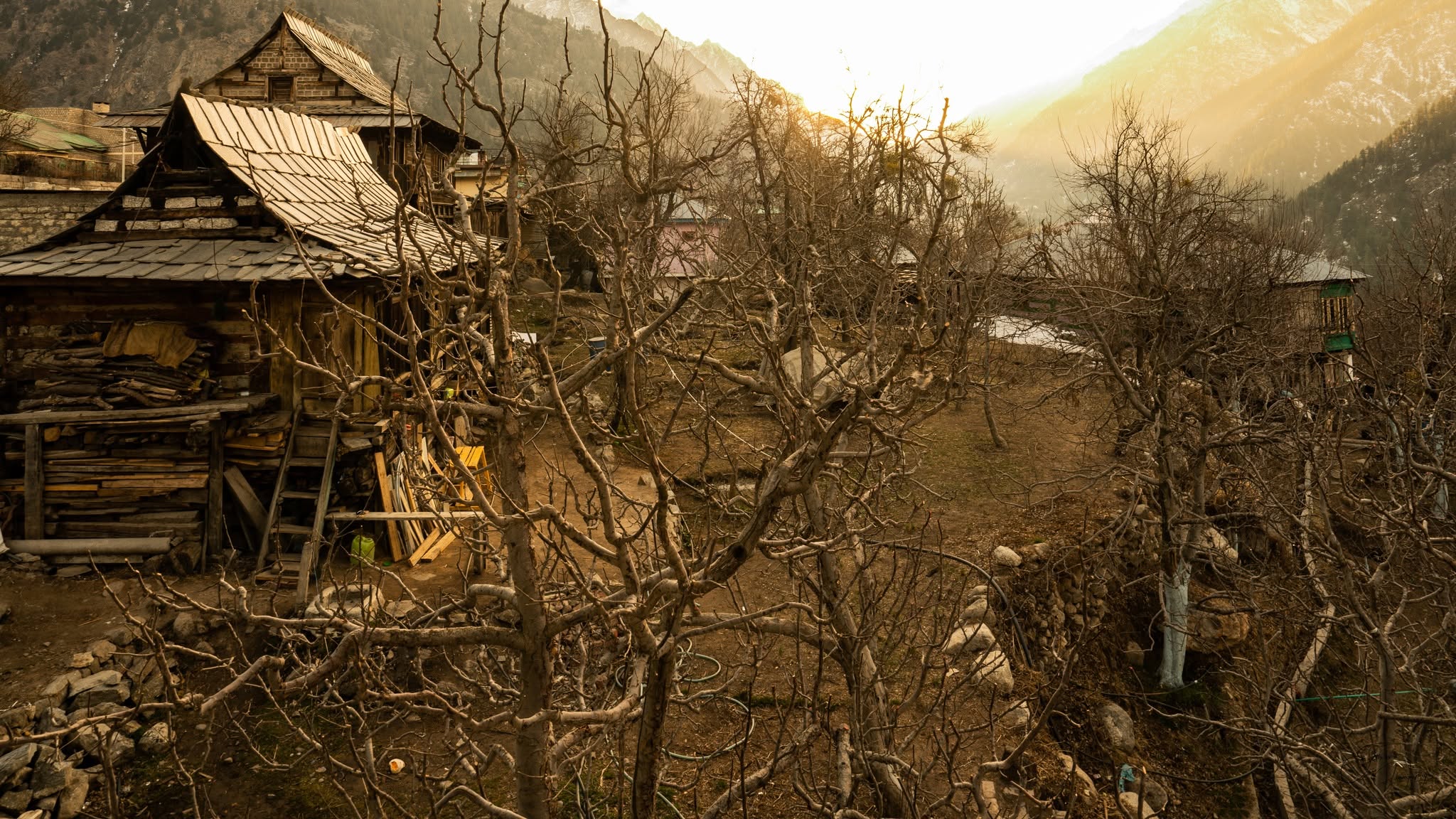
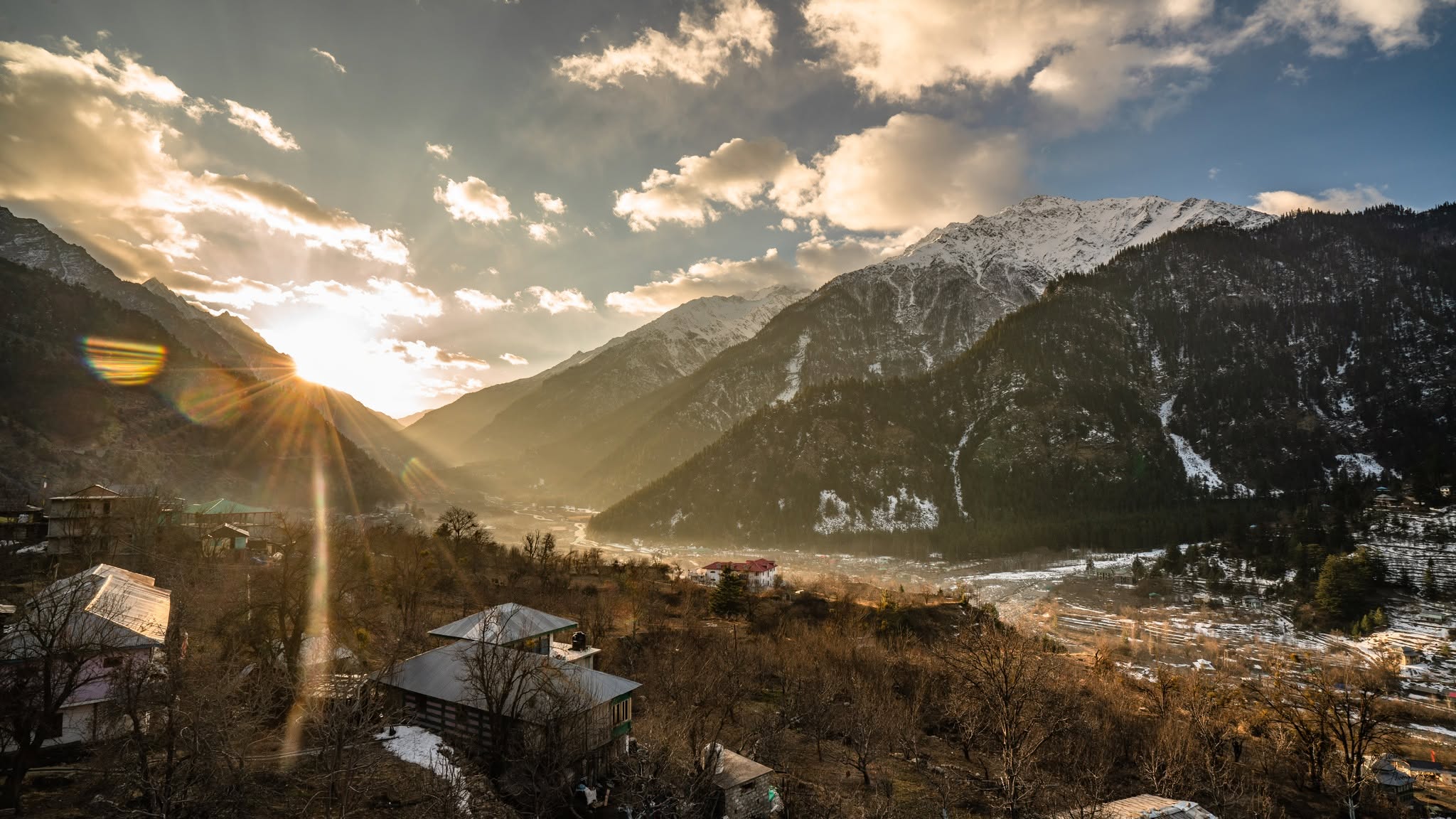
That evening, we sat facing the peaks and watched the sky slowly catch fire — reds and oranges bleeding into one another as the sun went down. Somewhere in that stillness, a quiet certainty settled over me: this was the first step of the dream. The snow leopard expedition had truly begun.
Day 2, Part 1 — Sangla to Chicham: Into the Snow
The cold arrived before the sun did. It was sharp enough that even the metal of our car seemed to shiver under it. The sky hung low and grey, the temperature sliding toward zero, and for the first time we reached for the jerky in our bags — a small, involuntary admission that this was no ordinary drive.
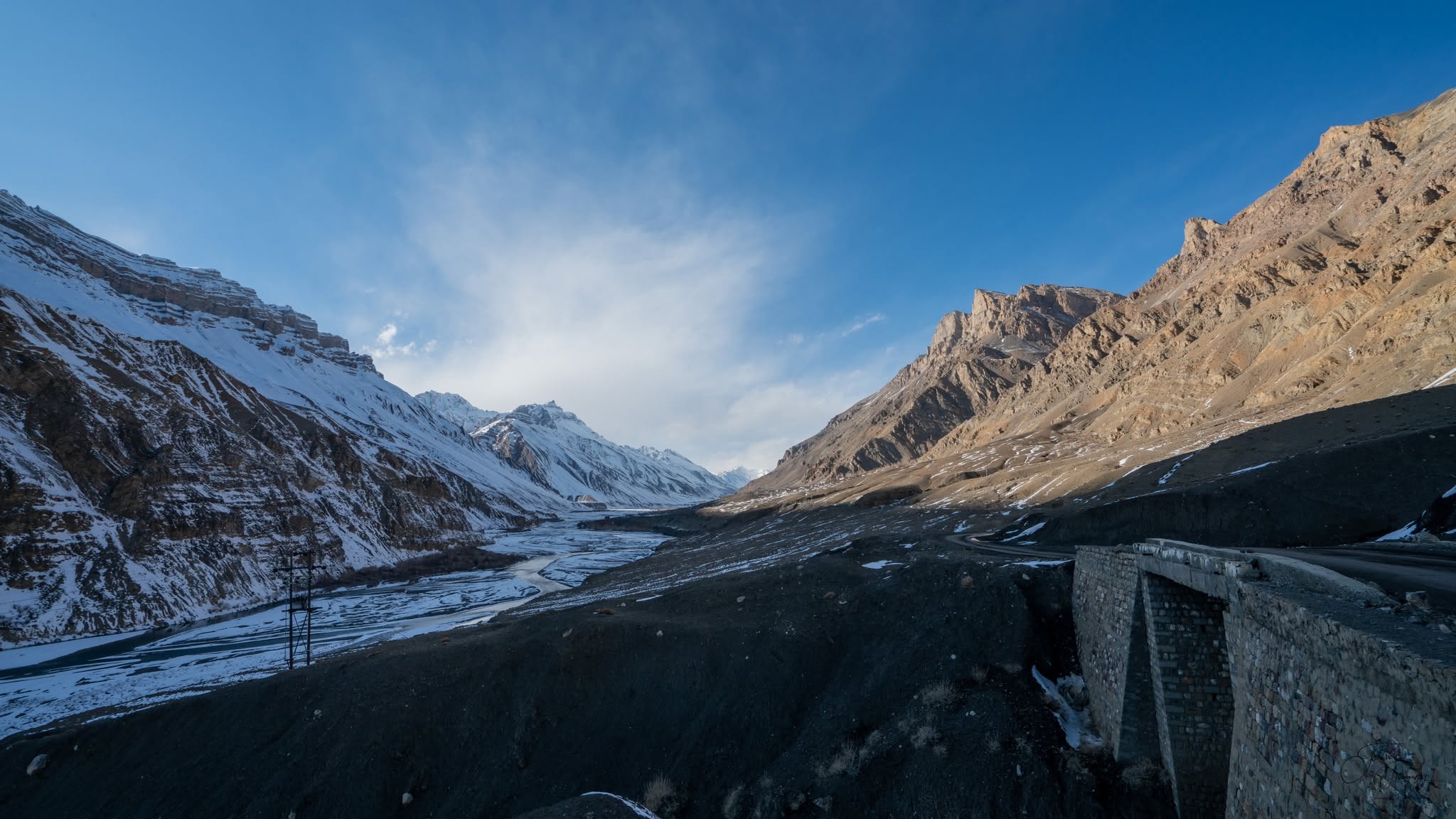
Ice glassed over one side of the road. On the other hand, our own excitement kept pace with it. The trees along the way had been stripped bare, standing like bare sticks against the white — and somehow, even in that emptiness, there was a strange kind of beauty. The only sound was the Spiti River running alongside us, its water clear as glass but dulled at the edges by the cold, moving slowly past icebergs that hadn’t yet begun to melt.
Villages grew sparser the higher we climbed. The only sign of life left in the valley was smoke curling up from a handful of houses, faint as an offering — and in the freezing air, that thin trail of warmth was oddly comforting.
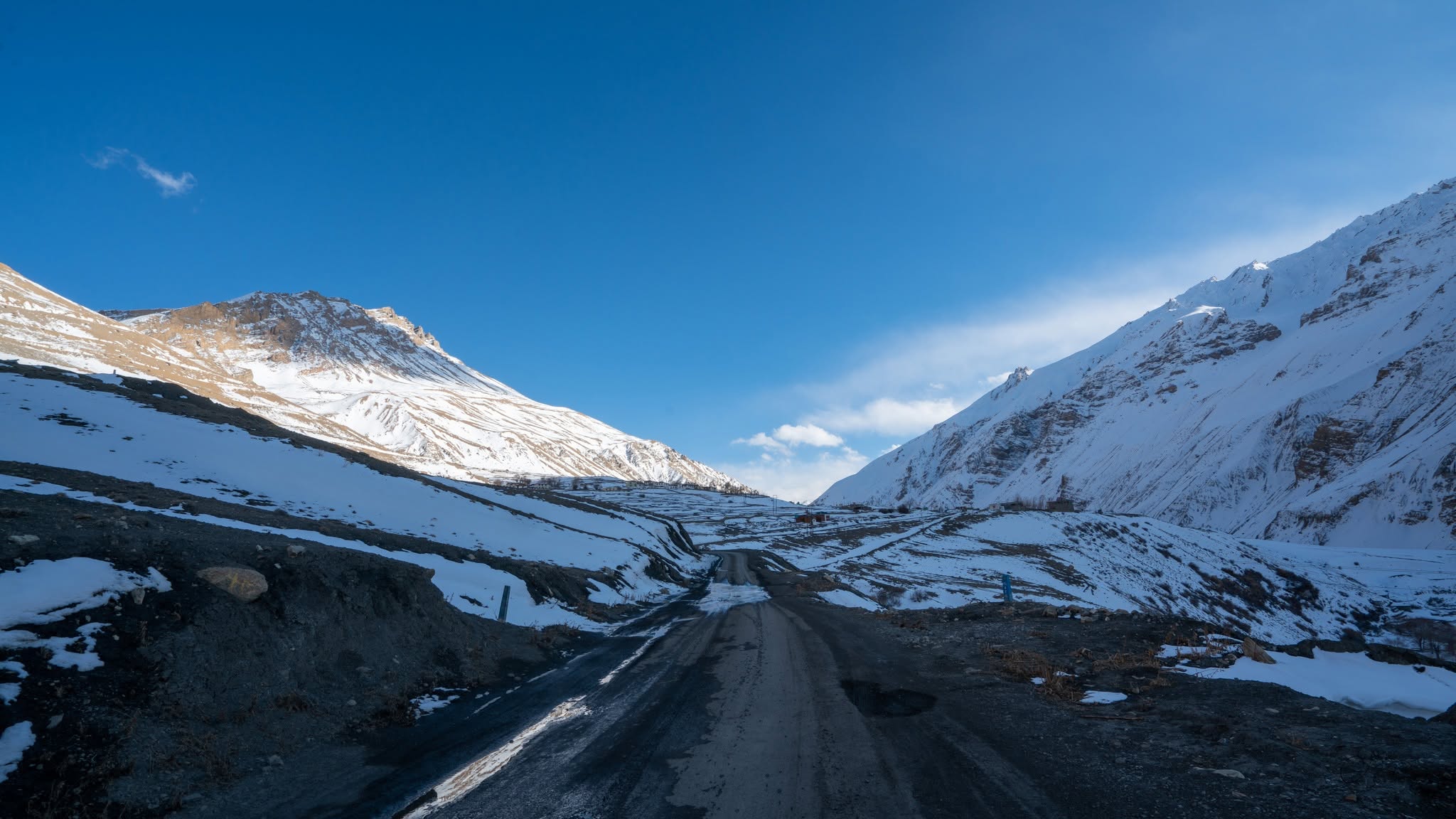
The road kept winding upward, and the mountains kept changing character with every turn — white one moment, grey the next, the whole sky dusted in pale snow. We passed through Chichim, one of the villages closest to the Chinese border, and something about knowing that the land on the other side of those peaks belonged to an entirely different country left us quietly unsettled. A border that looks like nothing more than an imaginary line on a map — and yet an entire different world sits just behind it.
Further along, a stream feeding into the Spiti gave us one more test of the cold, and loose rocks — frozen, thinly glazed with ice — kept tumbling down the slopes as pebbles rolled free. It felt, at times, like the mountains themselves were testing our resolve.
Key Monastery: Silence in the Snow
Say the words “Spiti Valley” to anyone who’s been, and the first image that comes to mind is almost always Key Monastery — perched on its hilltop, standing amid the snow like a monument to human determination. Just past Kaza, the valley’s liveliest town, it welcomes you instead into total silence: a petrol station, a quiet road, and beyond that, nothing but earth, ice, water, air, and light — all somehow speaking the same truth.
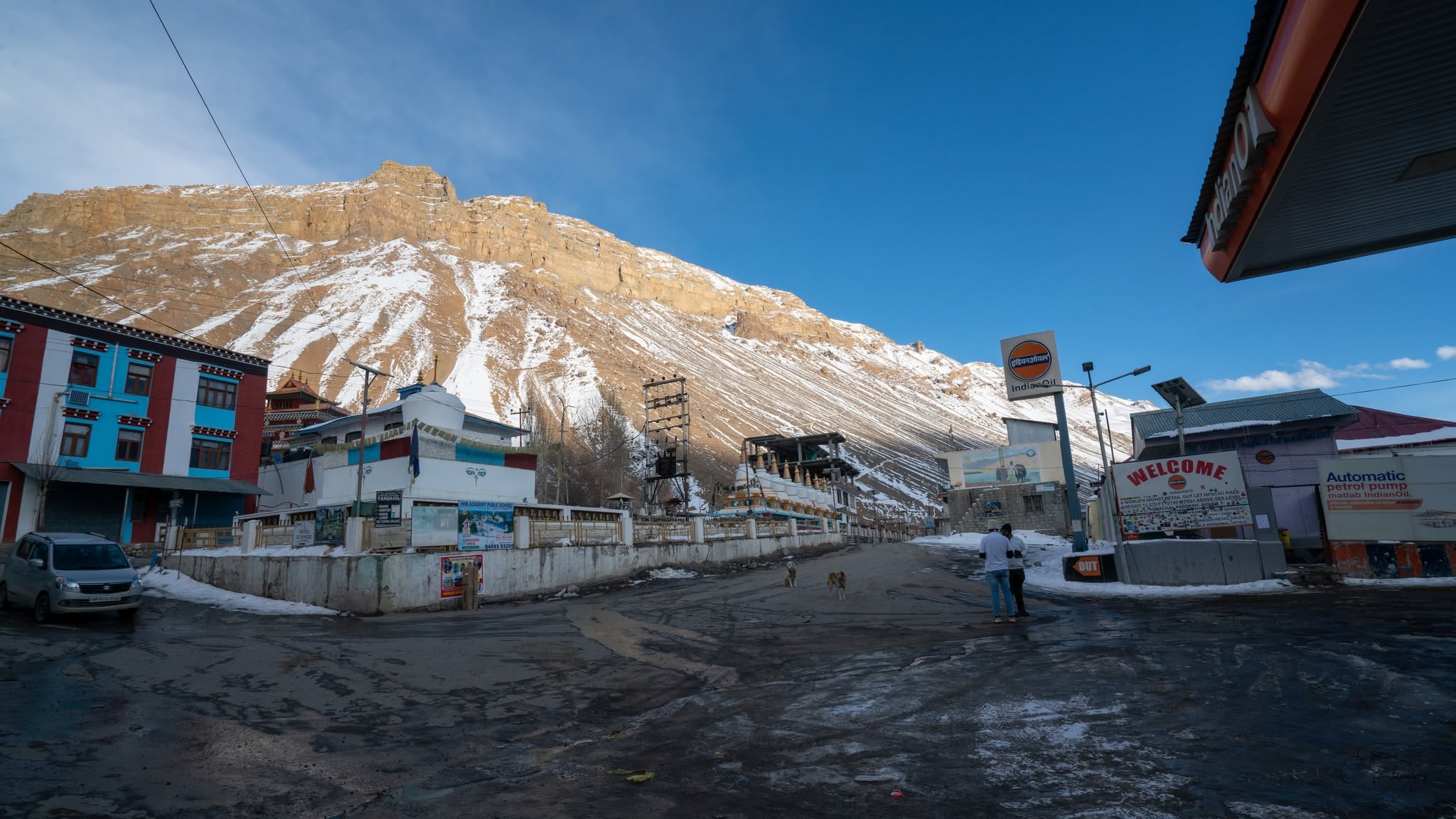
Key Monastery itself felt like meditation carved directly into rock, with white ridgelines stretching out in every direction beyond it.
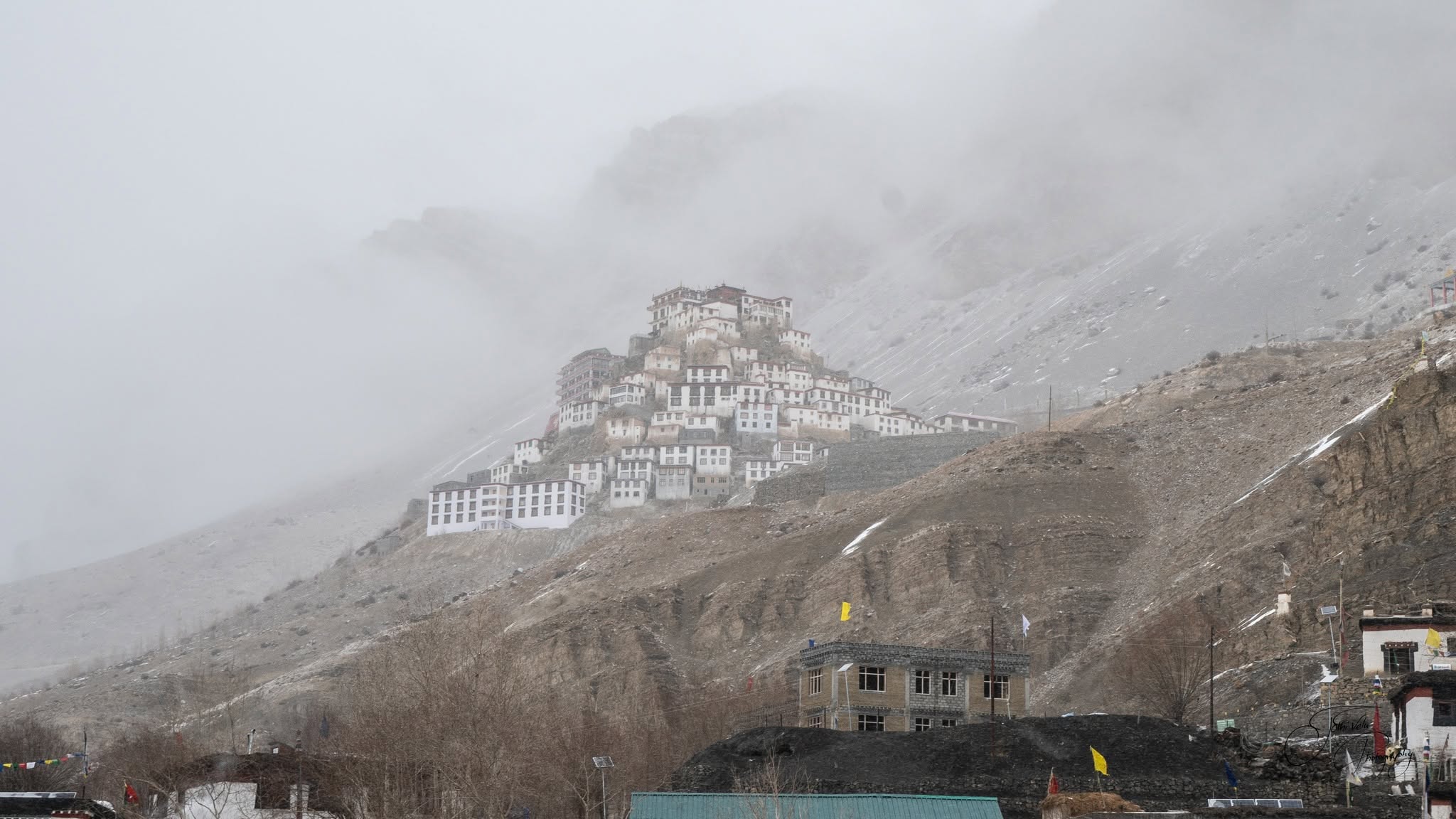
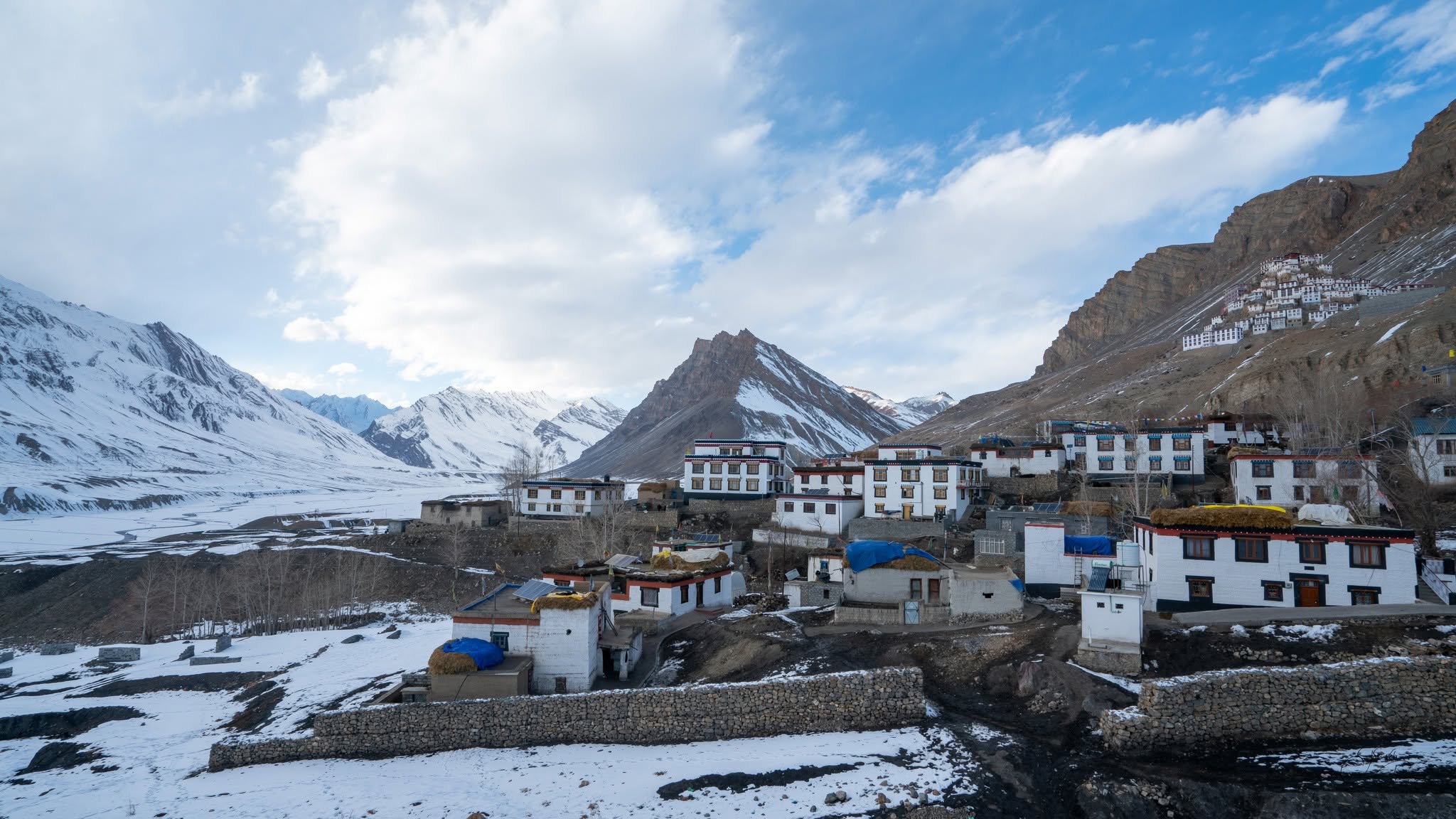
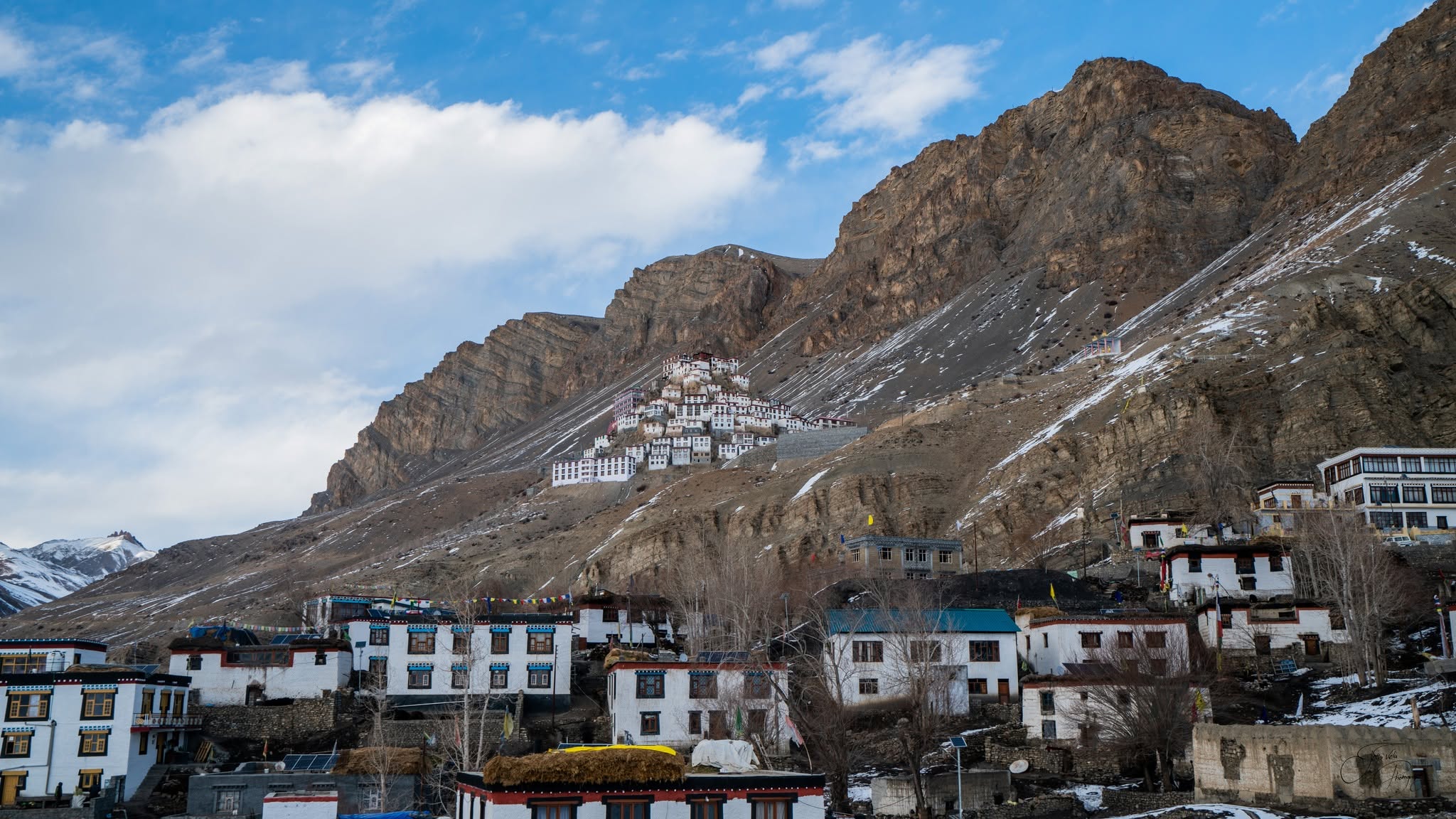
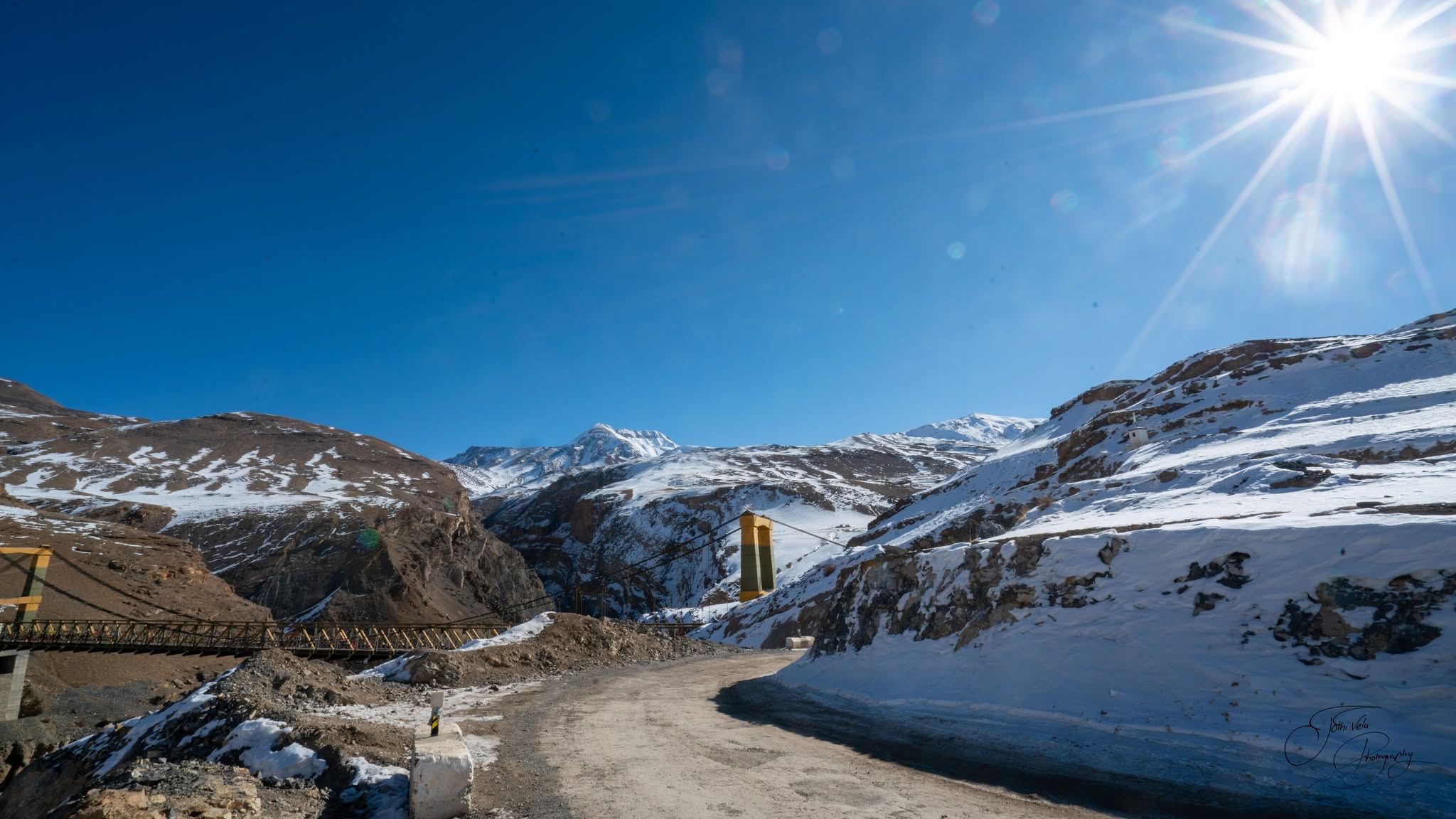
From there, rising out of the ice, came our first sight of the Chicham Bridge — a lifeline for this part of Asia, connecting the two banks of the Spiti River. Built with the engineering strength of the Indian Army, it stood firm against snow, wind, and water alike, its iron chains seeming to hum with quiet life as every second passed. Standing there, human strength and the vast, indifferent peace of nature felt momentarily fused — held together by nothing more than a single falling snowflake.
Day 2, Part 2 — Langza to Kibber: Following the Cold
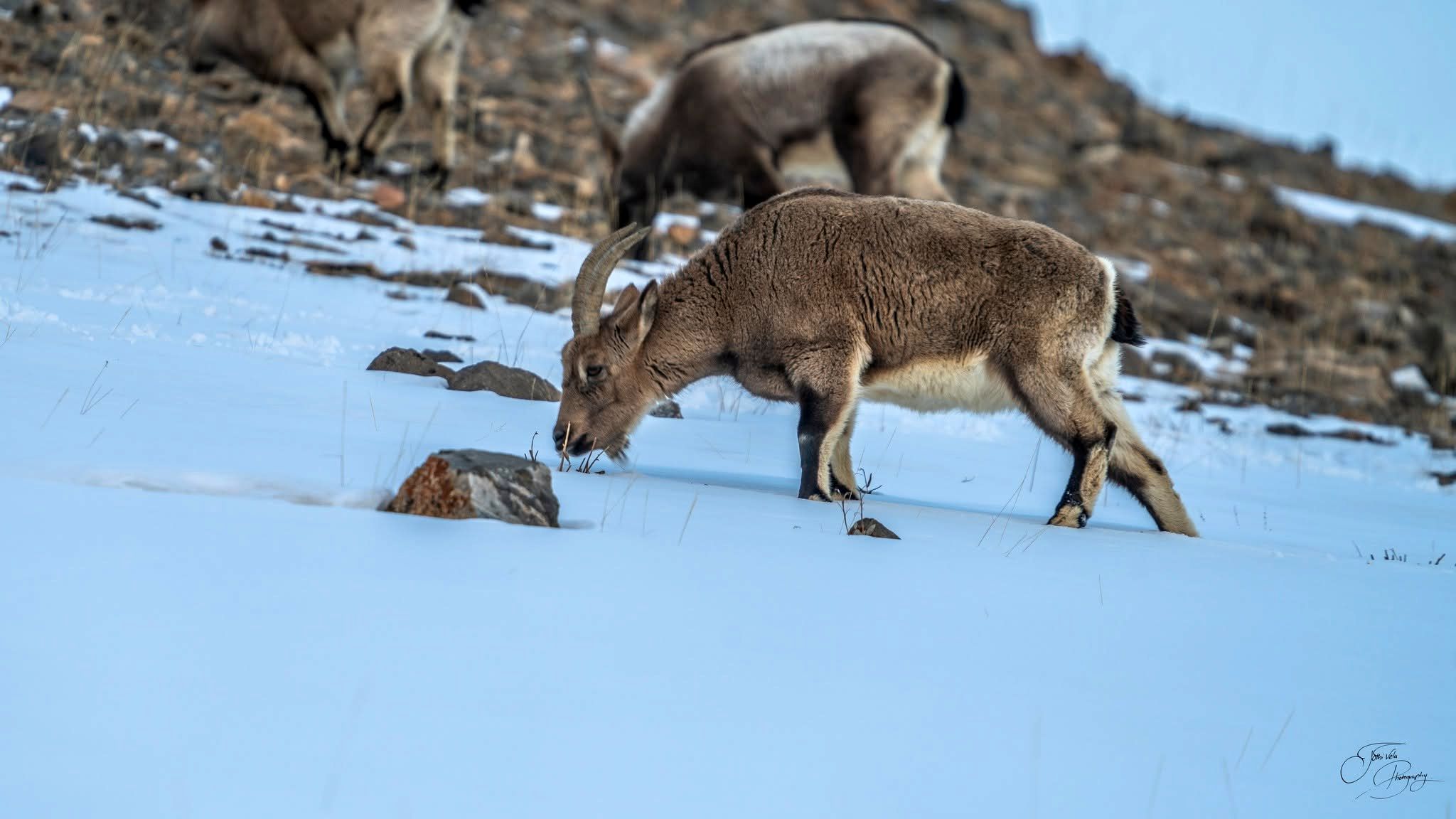
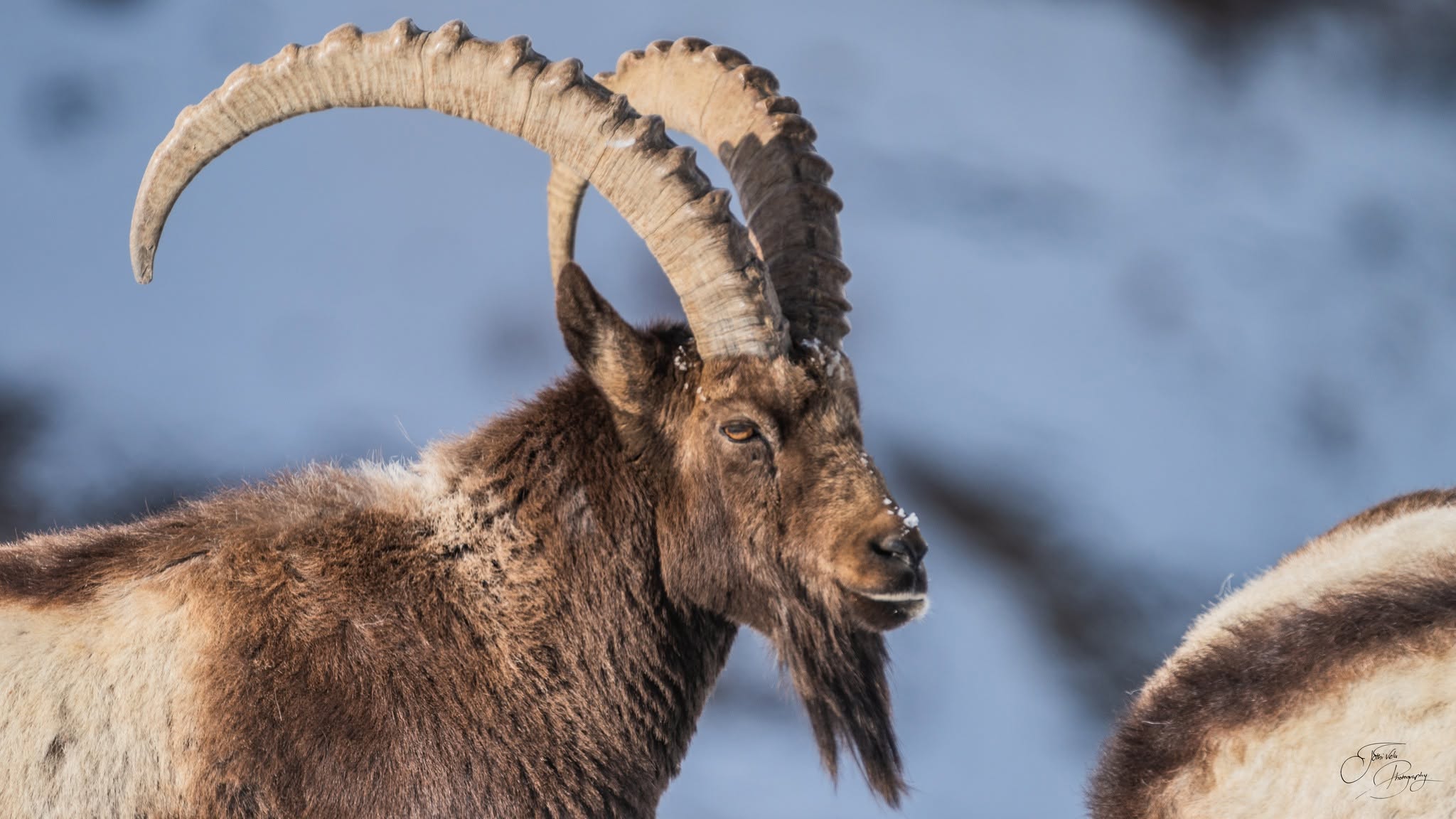
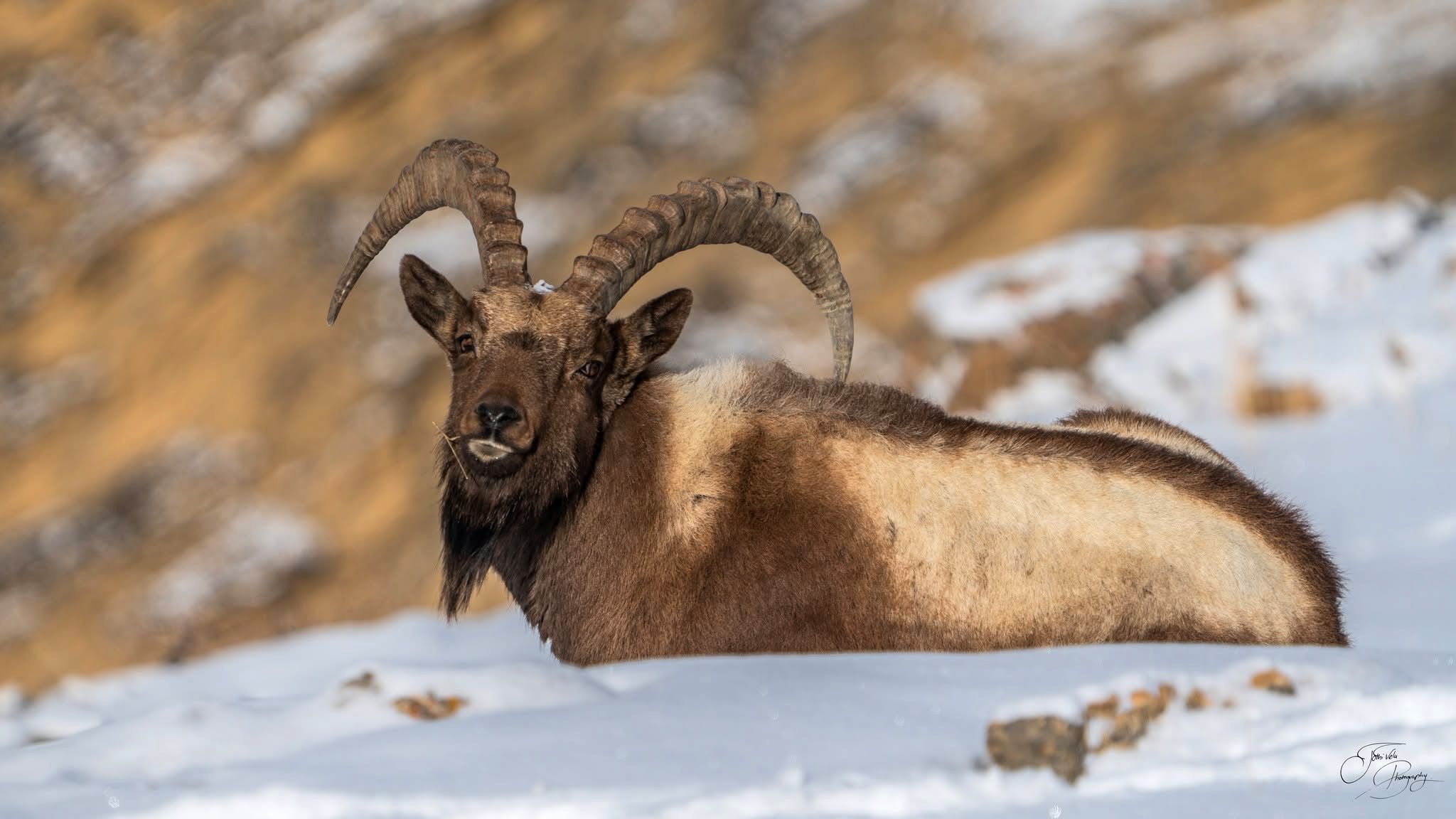
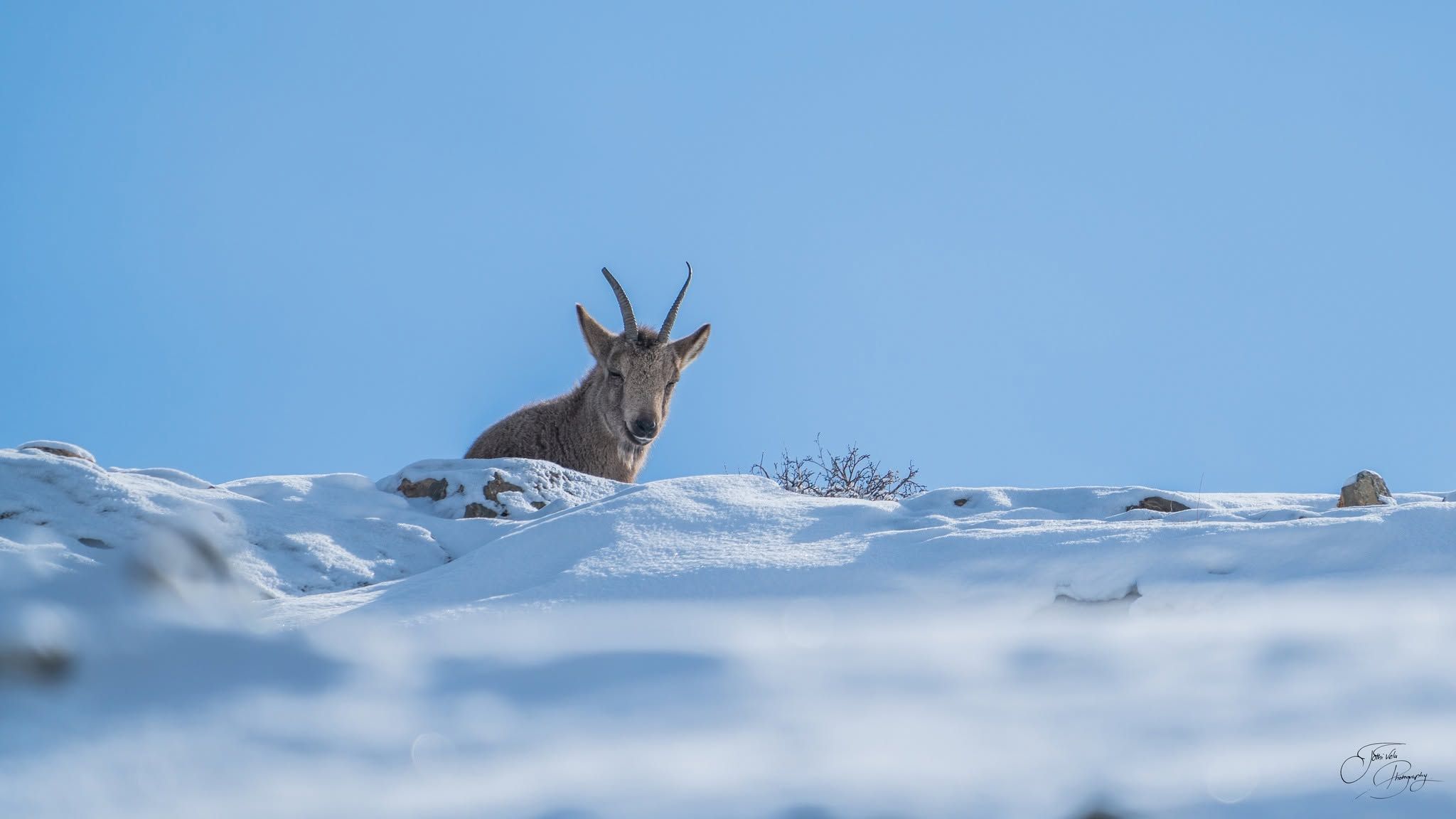
As we neared Kibber, just before crossing the bridge into the village, we spotted our first real sign of hope: a small herd of Himalayan ibex, the mountain goats that make up the snow leopard’s primary prey. Where the ibex go, the “King of the Mountains” is rarely far behind — it descends into the valleys specifically to hunt them. Seeing them felt like the first real clue in our search, and it filled us with cautious optimism.
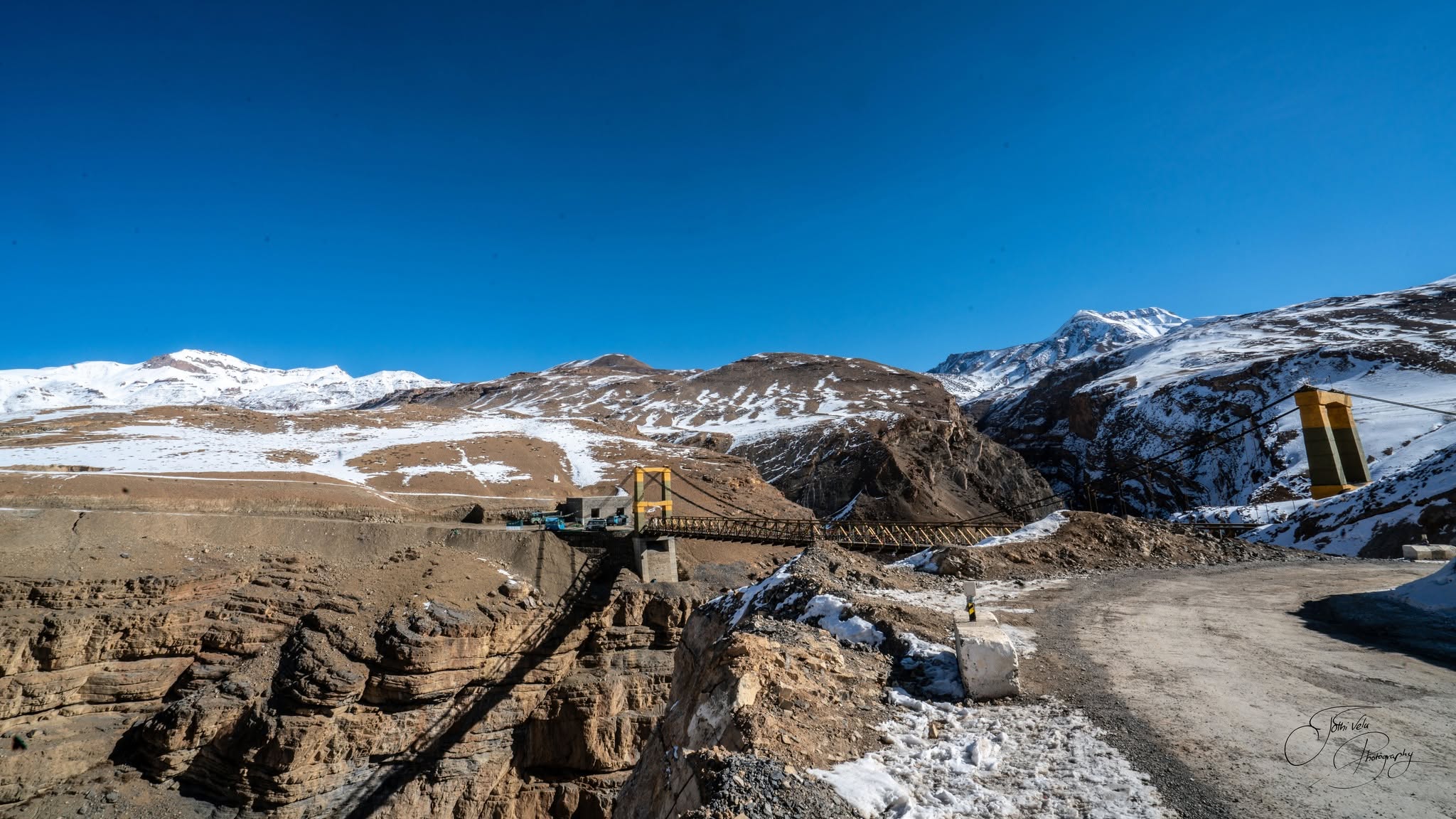
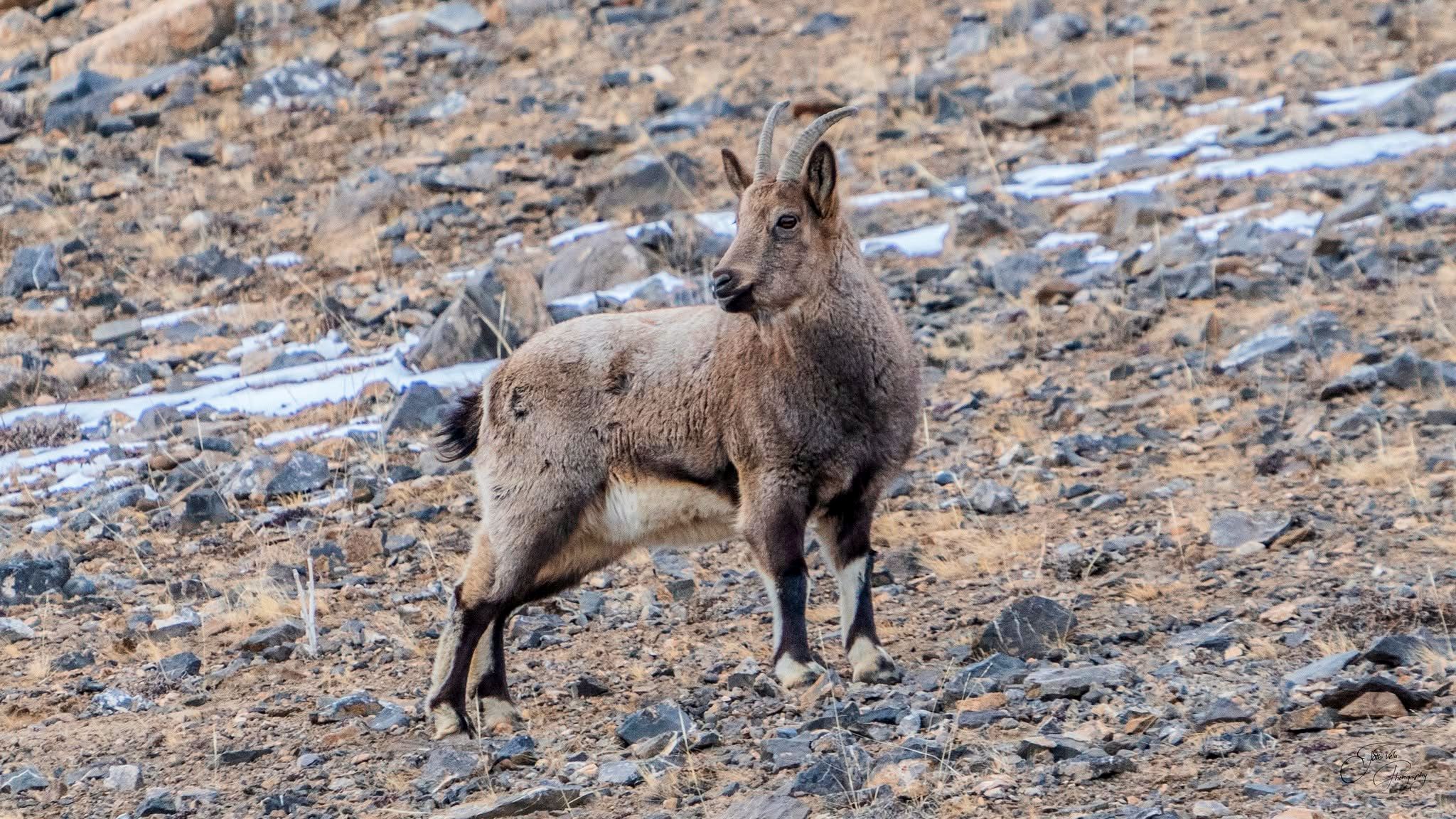
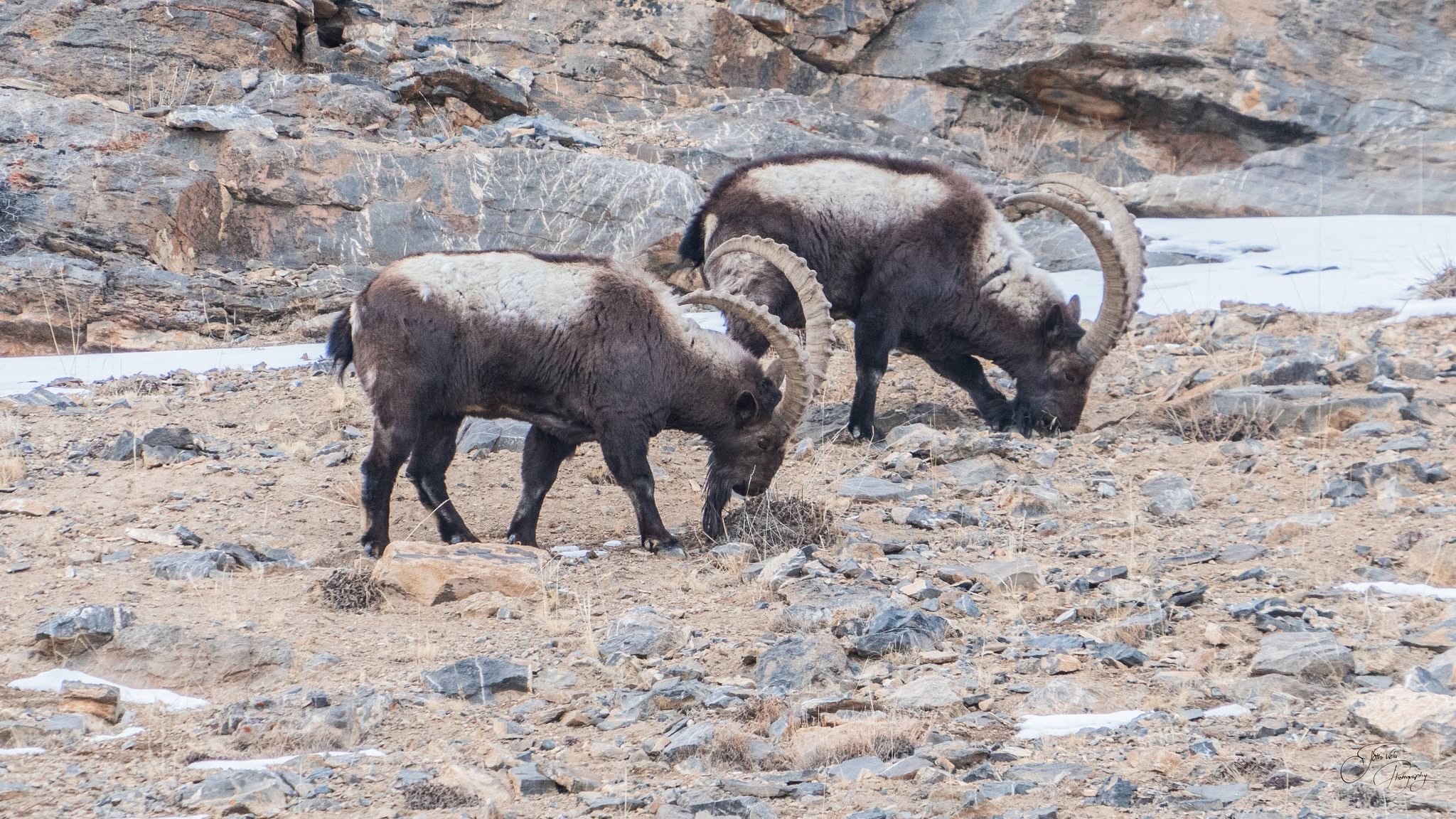
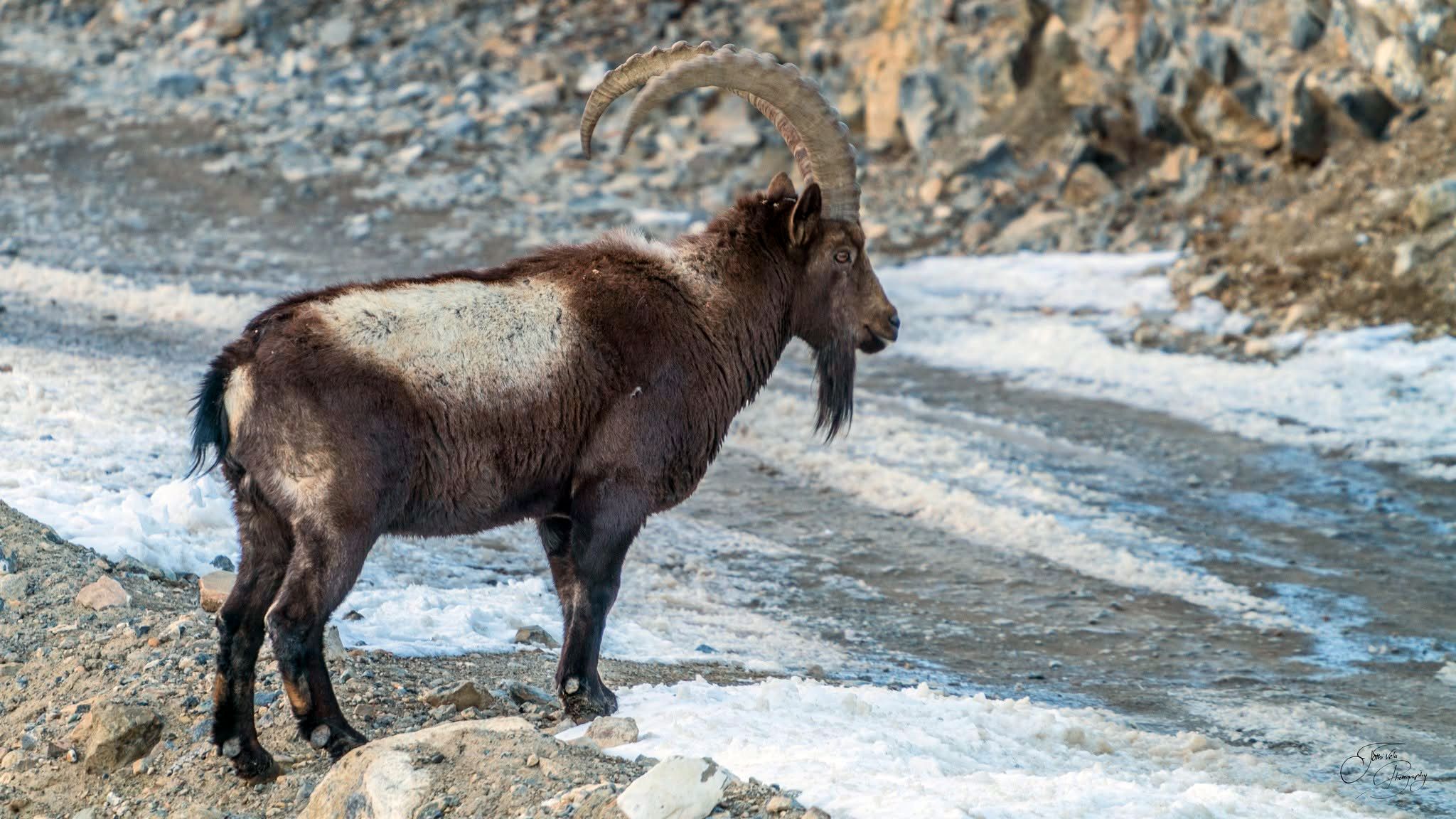
By then, the temperature had dropped to around -25°C, with forecasts predicting -32°C overnight. Even the makeshift toilet at our lodging and the blankets on our beds had begun to stiffen with cold. Heavy snowfall set in just as we reached Kibber, and our vehicle skidded slightly before finally coming to a stop.
Exhausted and half-frozen, we ate a meagre dinner — a chapati and a half between us — and fell asleep almost instantly. Before turning in, we plugged in our camera batteries and power banks, and made our plan: the search for the snow leopard would begin from Kibber the next morning.
Day 3 — The Long Wait in the Freezing Cold
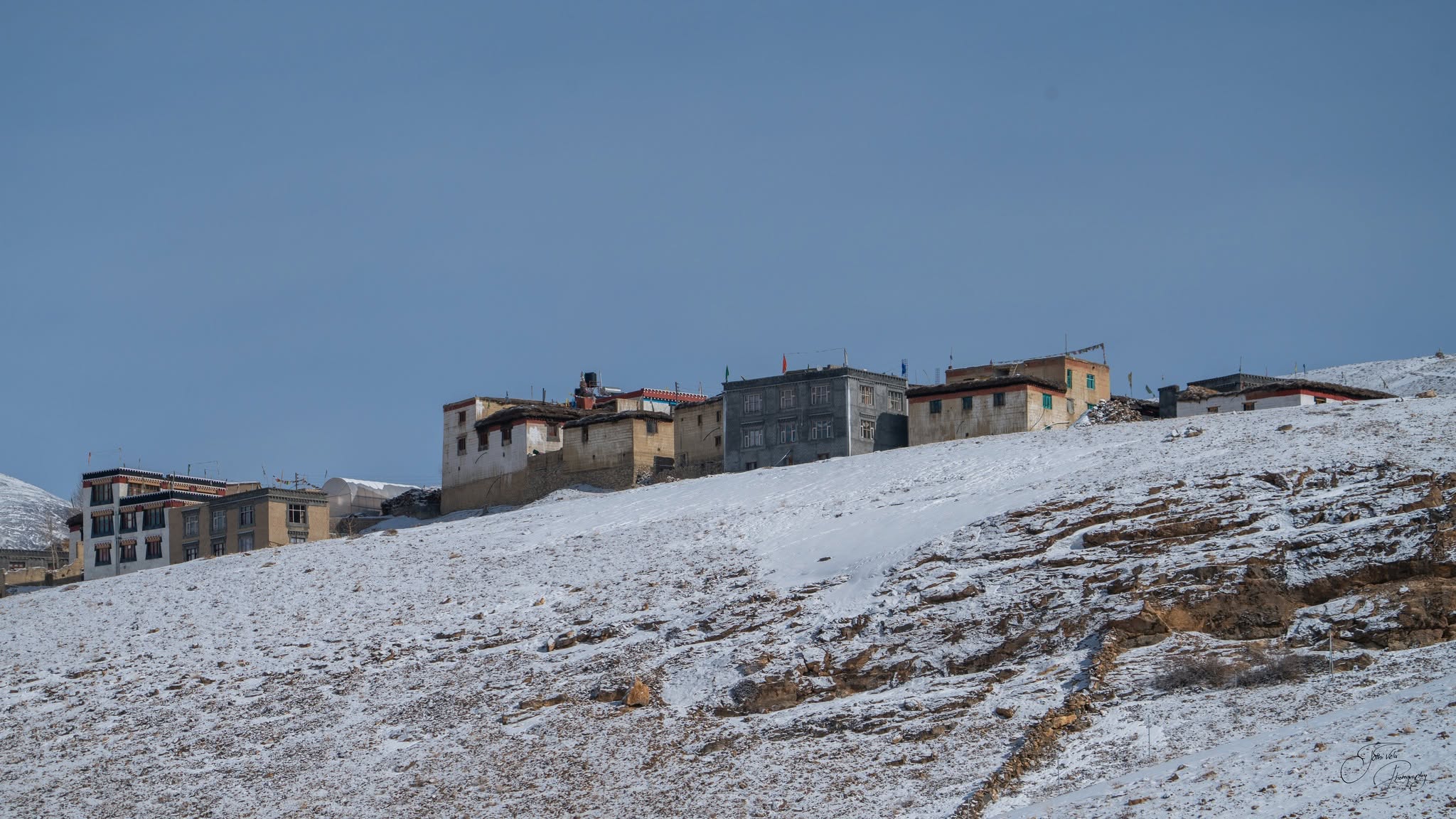
The third morning broke over a valley draped entirely in white after the previous night’s heavy snowfall. Chicham village, with its wooden-framed houses, glowed like gold against all that white. The temperature that morning: -29°C.
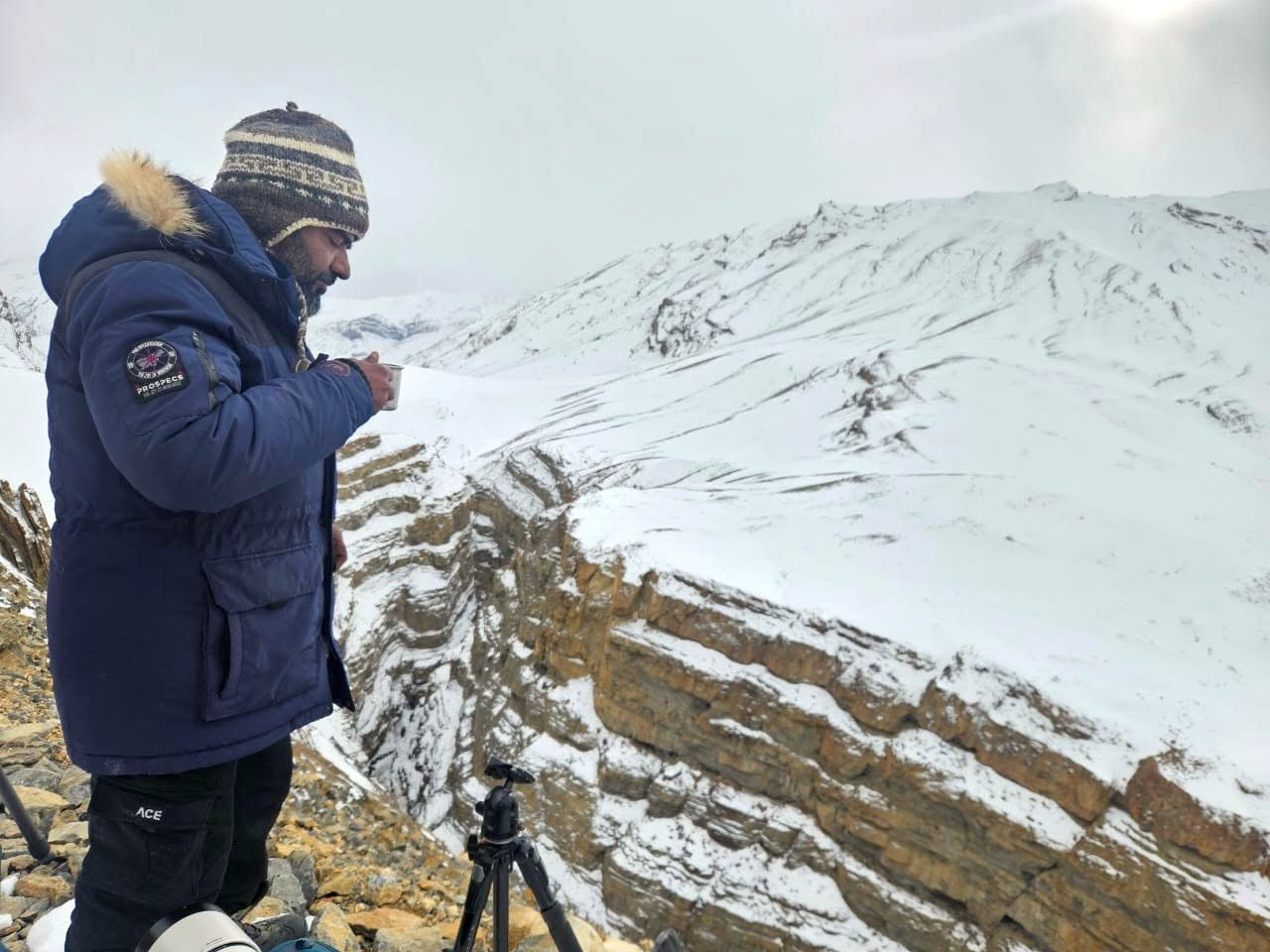
We set out on a light breakfast and a flask of hot black tea. Fresh snow held the clear imprint of animal tracks, and our local spotters had already gone ahead, scanning the ridgelines for any sign of the cat.
The Hike
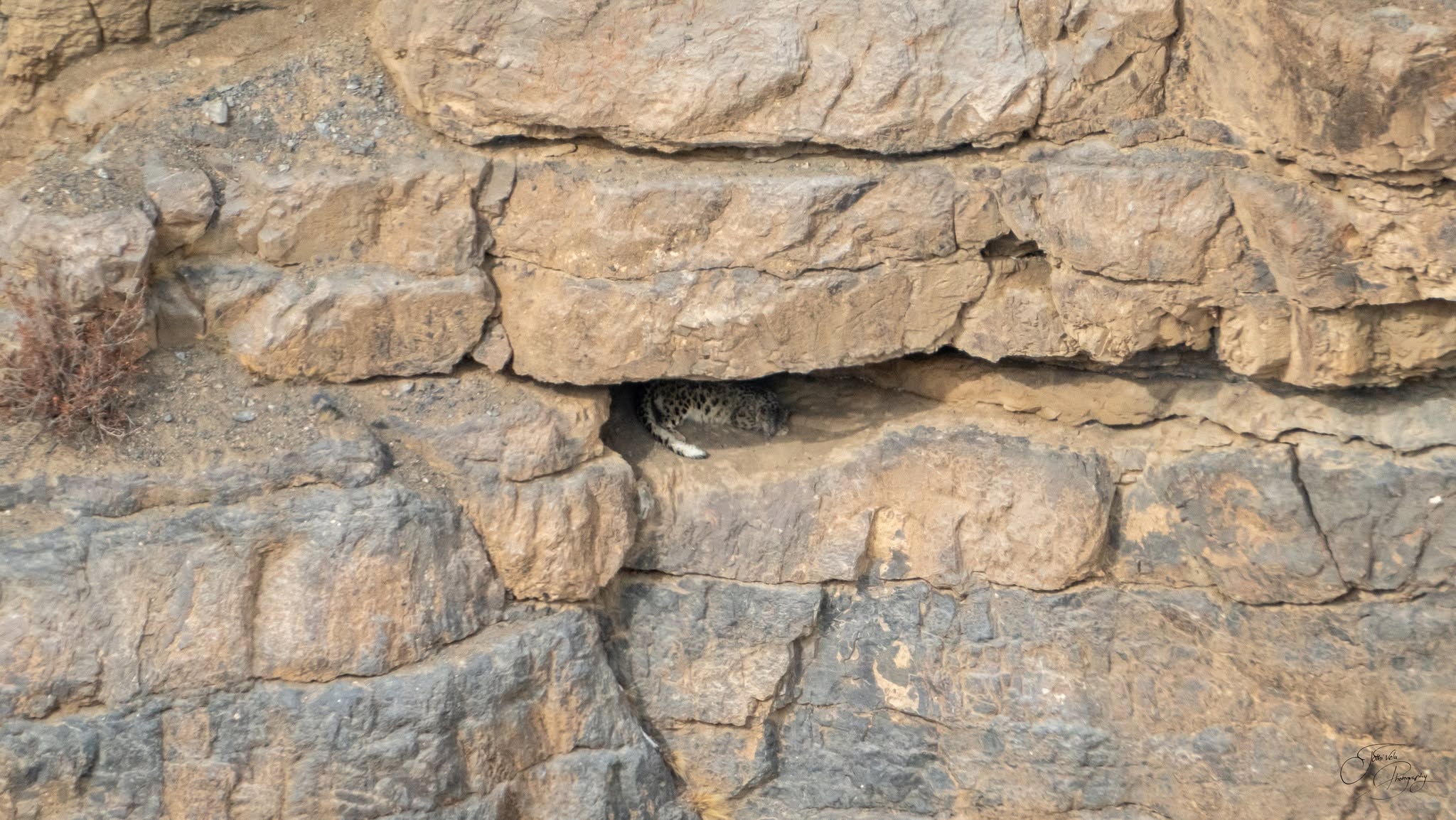
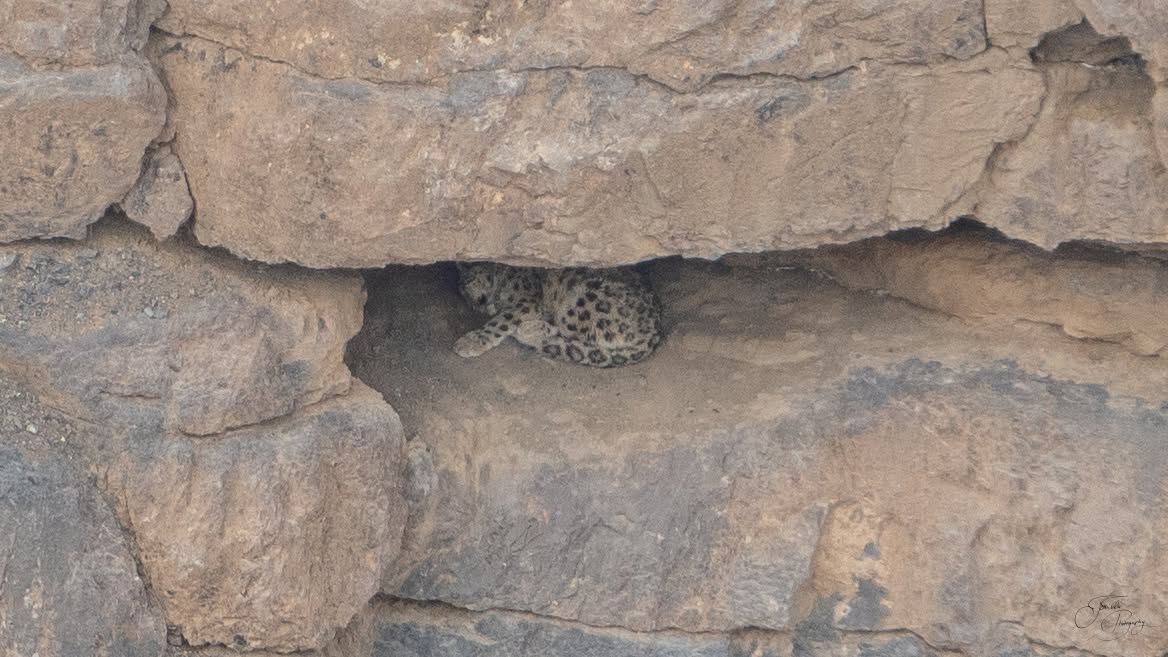
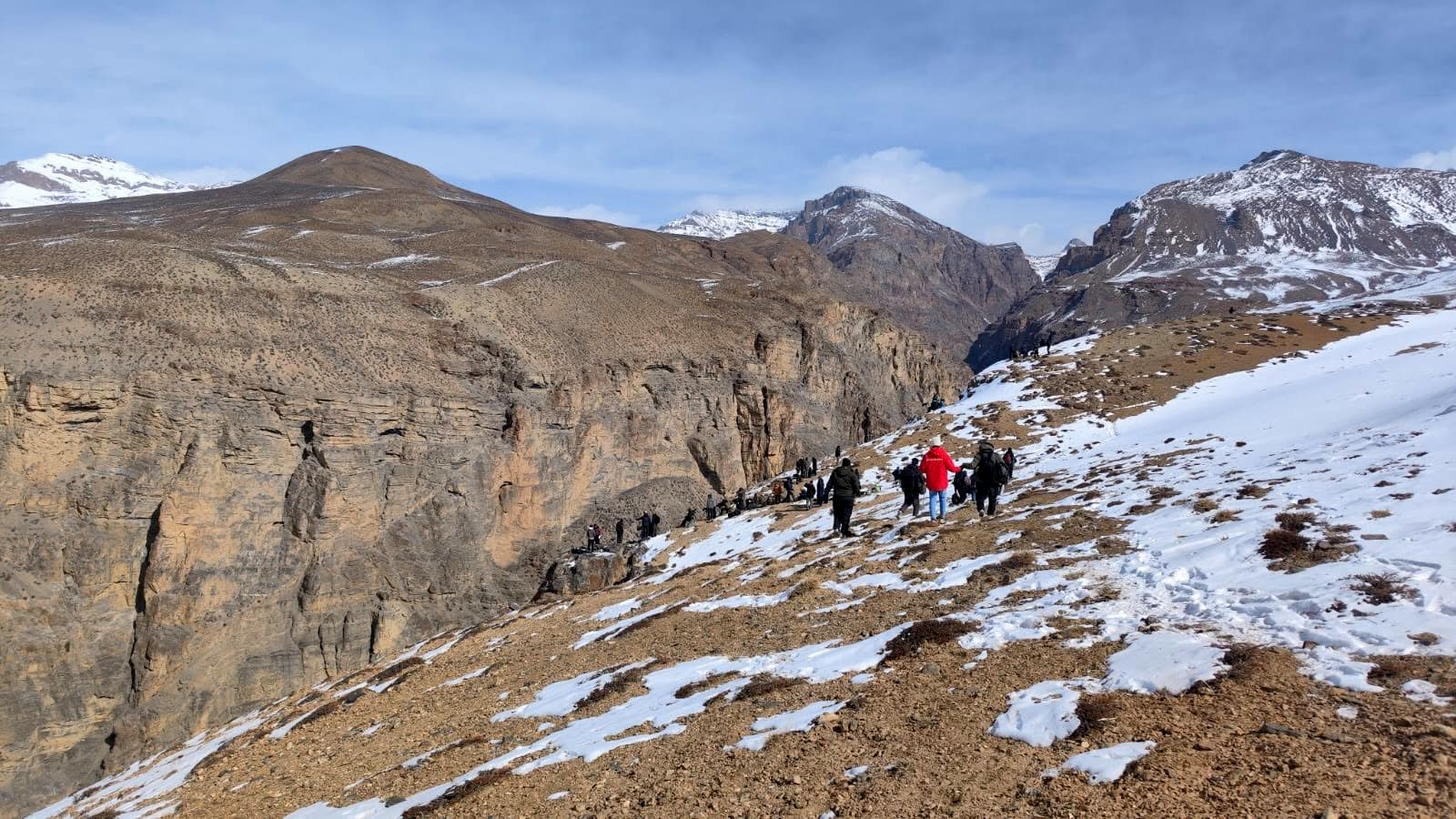
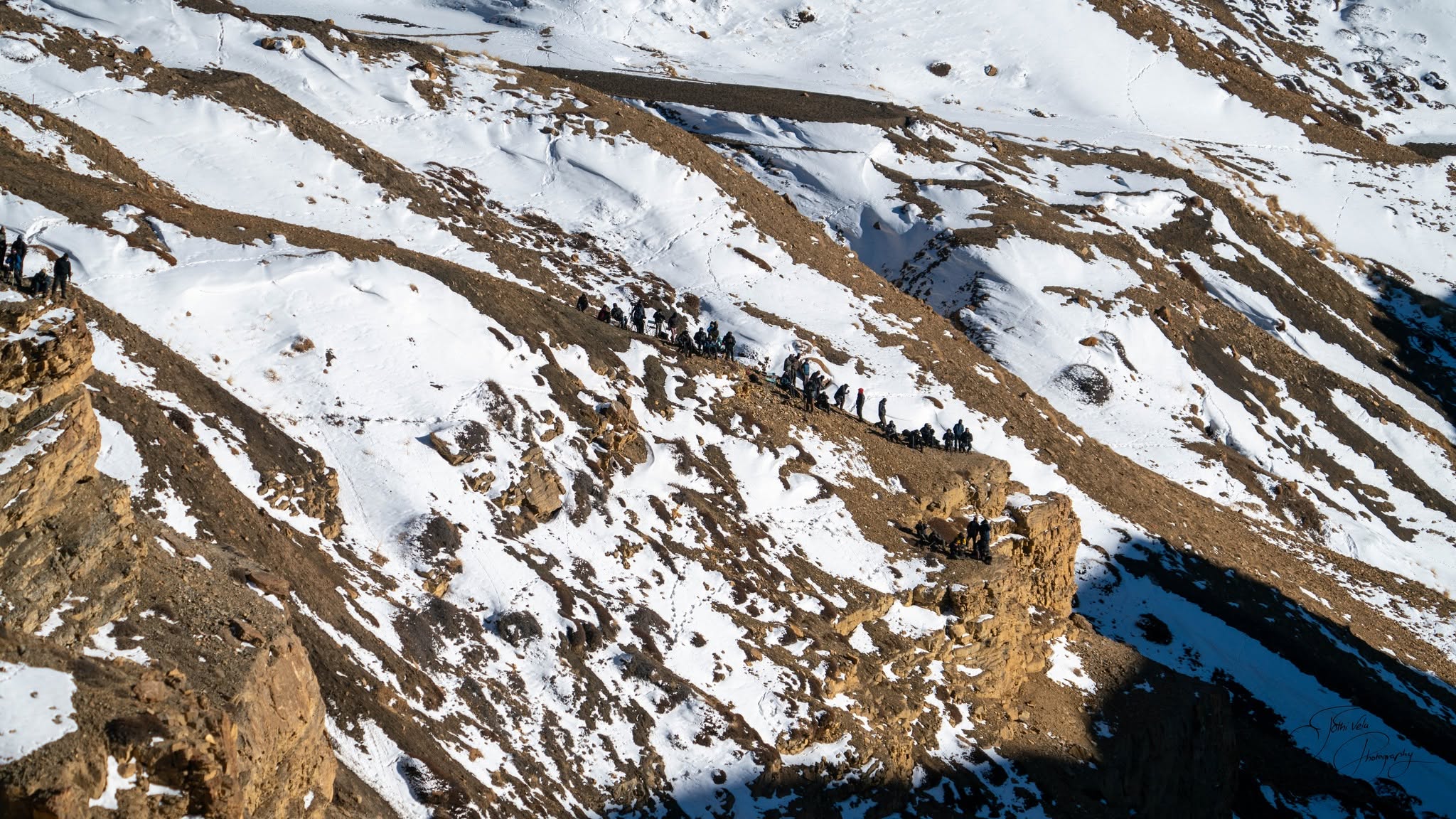
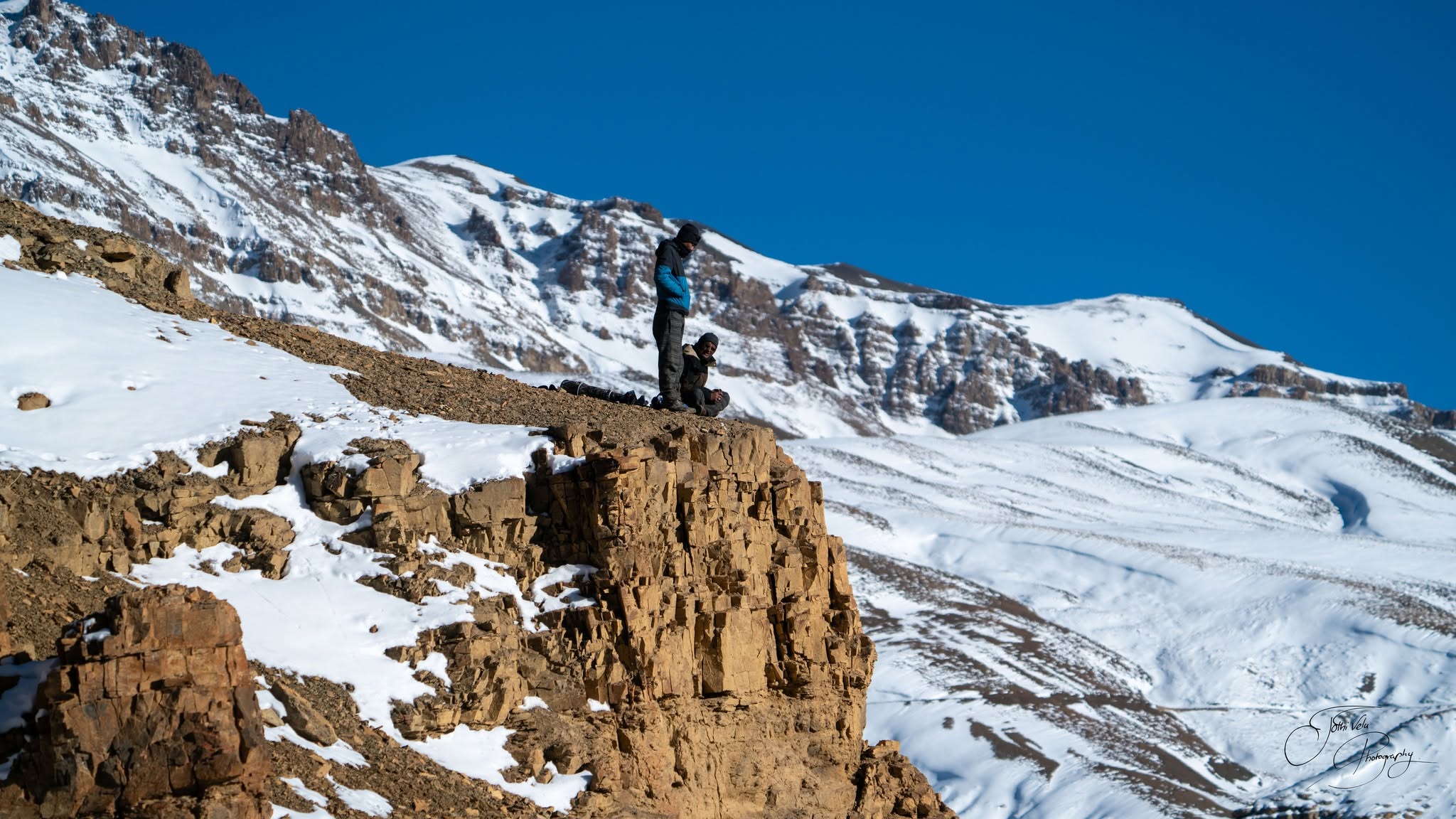
Word came back that a snow leopard had been spotted, asleep in a cave across the valley. That news sent a jolt of energy through the whole group, and we set off on a punishing three-kilometre trek across the snow to reach the ridge opposite it. Forest department officials made it clear: absolute silence, no disturbance, no exceptions. So we waited — cameras trained on the mouth of the cave, bodies locked rigid against the -29°C cold.
The Glimpse
After a long, motionless wait, something finally stirred. The snow leopard rose slowly, stretched with unhurried grace, and stepped out of the cave, its long tail swaying behind it. In that instant, the cold and the exhaustion of the trek simply disappeared. For a wildlife photographer, waiting isn’t just time passing — it’s something closer to penance. An eight-hour vigil suddenly felt like nothing at all.
Holding the Cold at Bay
We set up our tripods and kept shifting — standing, sitting, moving just enough to stay functional — speaking only in whispers so as not to disturb the animal. At one point it snowed steadily for a couple of hours, and we stripped off our outer jackets to wrap around our cameras, protecting the equipment before ourselves.
To keep our own bodies from shutting down in the cold, we did small exercises right where we stood — including Thoppukaranam, the traditional squat-and-ear-hold gesture of devotion to Lord Ganesha — more prayer than exercise at that point.
The leopard stayed roughly a kilometre away the whole day, occasionally rolling over or slipping back into the cave, never quite giving us the clean shot we were after. We rationed our food and stayed put until evening. By 5 PM, the snow had thickened enough that we had no choice but to pack up and make the three-kilometre trek back, slipping over ice-covered paths into Chicham village, then stumbling the last stretch on foot carrying our gear.
That night, worn down to nothing, we ate hot chapatis and chana, plugged in our gear for the next day, and collapsed into sleep. The search wasn’t over yet.
Day 5, -27°C: The Manifestation
The sun had blazed relentlessly the day before, but Spiti doesn’t let you forget where you are — even on clear days, the cold cuts just as deep. That morning, the temperature had dropped again to near -27°C.
Just as we were setting out, hoping today might finally be the day, word came in from our spotters: a snow leopard had been sighted in a valley beyond the village that’s home to the world’s highest post office. We moved immediately.
By the time we arrived, the hunt was already over. The leopard had killed a goat, dragged it aside, and was making its way slowly toward its resting spot. We stopped the vehicle and started down the slope on foot, tripods and camera gear in hand, into three feet of fresh snow.
Every step sank straight through to the ground. Pulling a leg free just to take the next stride became its own kind of workout. Somewhere 600 to 700 feet below us, the animal we’d come all this way for was moving quietly away.
Standing on the ridge, scanning the valley, my guide finally pointed: “There — on that rock.” I looked.
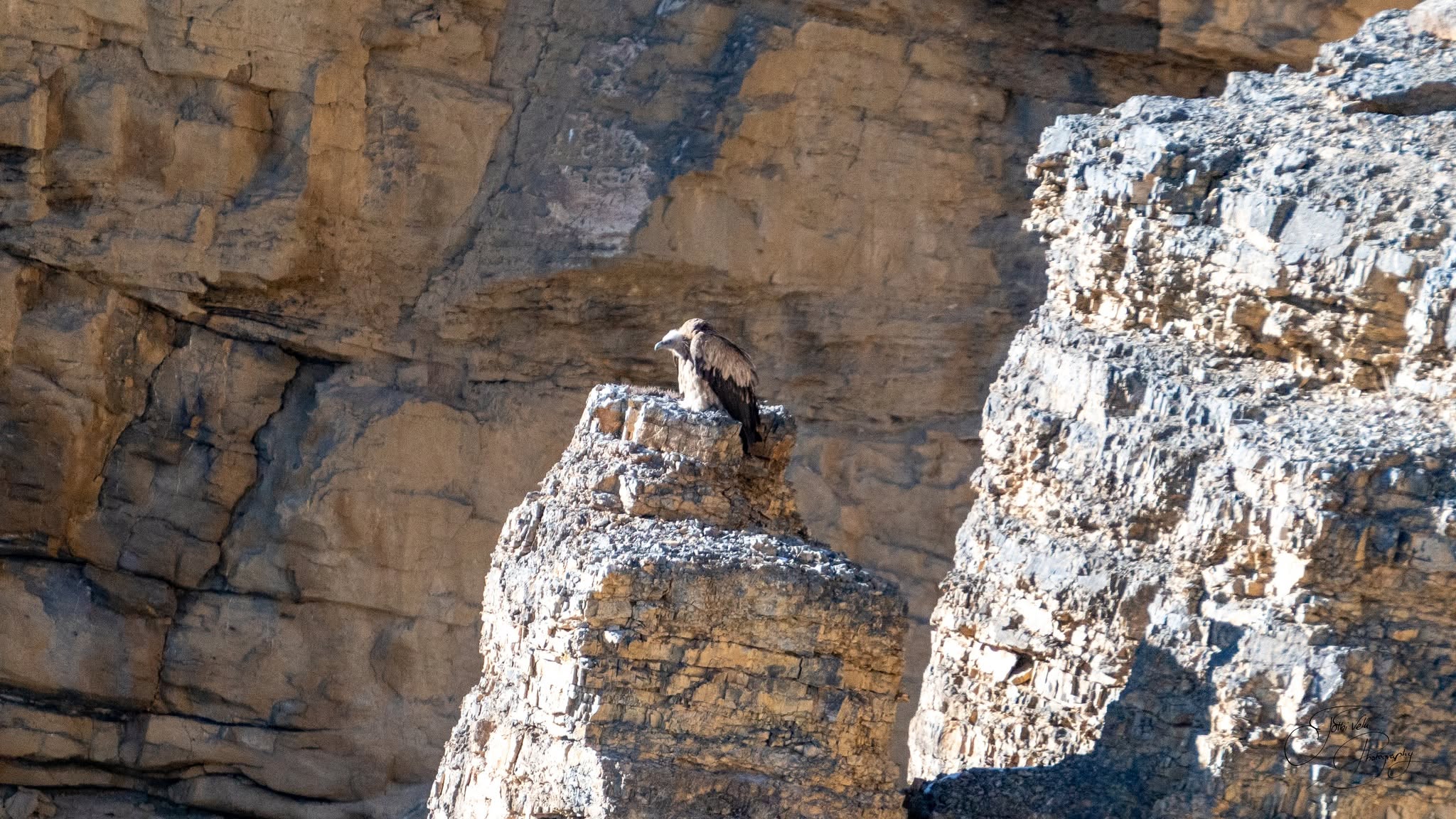
A bearded vulture — a bone-eating scavenger — sat with quiet majesty on the ridgeline. And far below it, having finished its hunt, the snow leopard lay stretched out in the sun, forelegs extended, chin resting against the rock, utterly at ease.
It was, without exaggeration, a wildlife photographer’s dream frame: a vulture above, a leopard basking below. That single image alone justified every hour spent post-holing through knee-deep snow at -27°C with fifteen kilos of gear on my back.
Within minutes, the leopard rose and disappeared, and the search began again. We crossed two or three more kilometres of ridgeline, and at one point, descending a steep 40-foot slope, I even managed to tear my trousers. Lunch, such as it was, amounted to some bread, a potato-stuffed parotta, and more black tea — thin fuel for the effort we were putting in.
Then, movement below a ridge caught our eye. Camera already up, I looked through the lens — and at a perfect right angle, two eyes locked directly onto mine. It was a genuinely spine-tingling moment, the kind that feels lifted straight out of a film. In the distance, that unblinking gaze held steady, fixed on me.
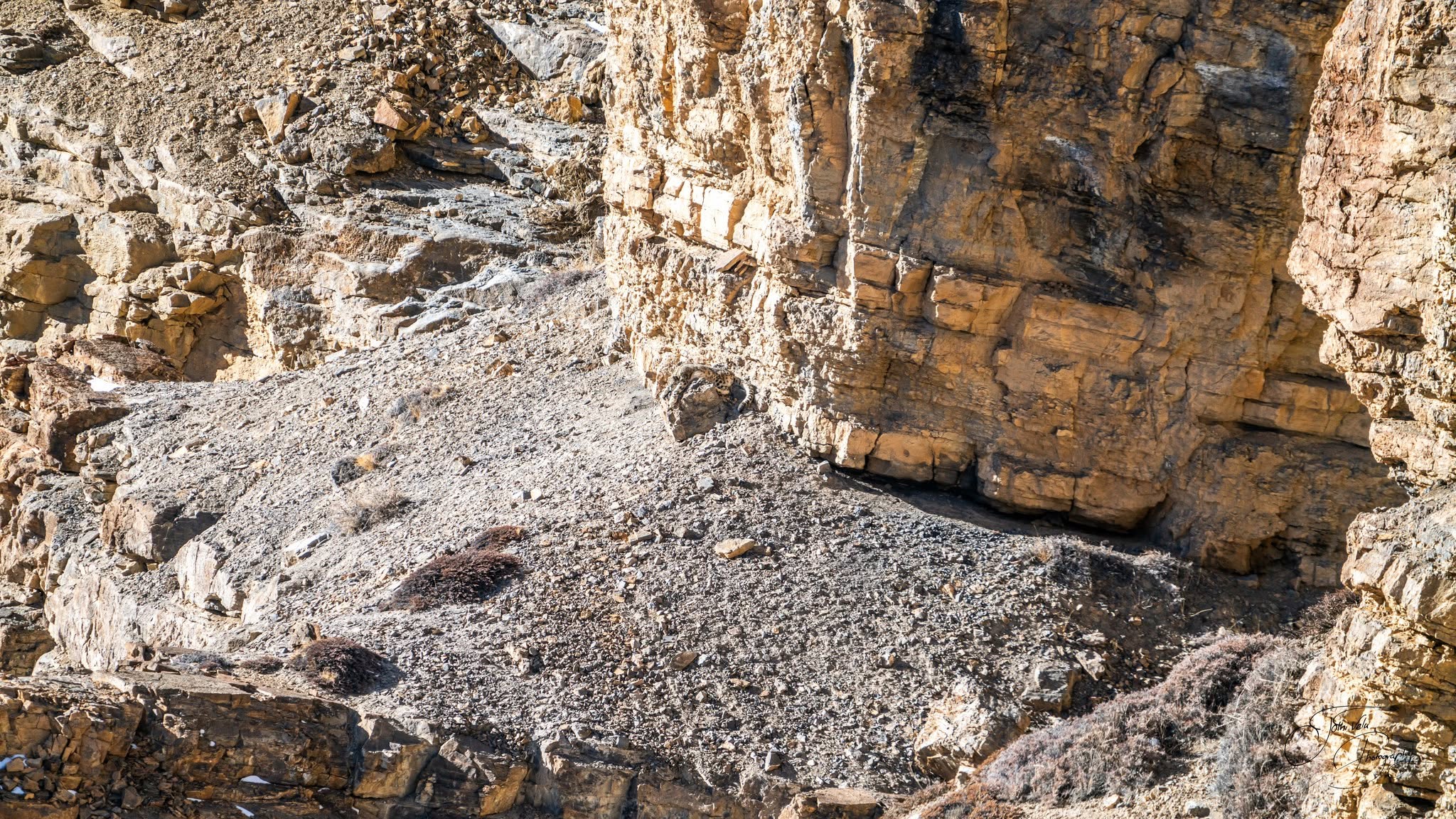
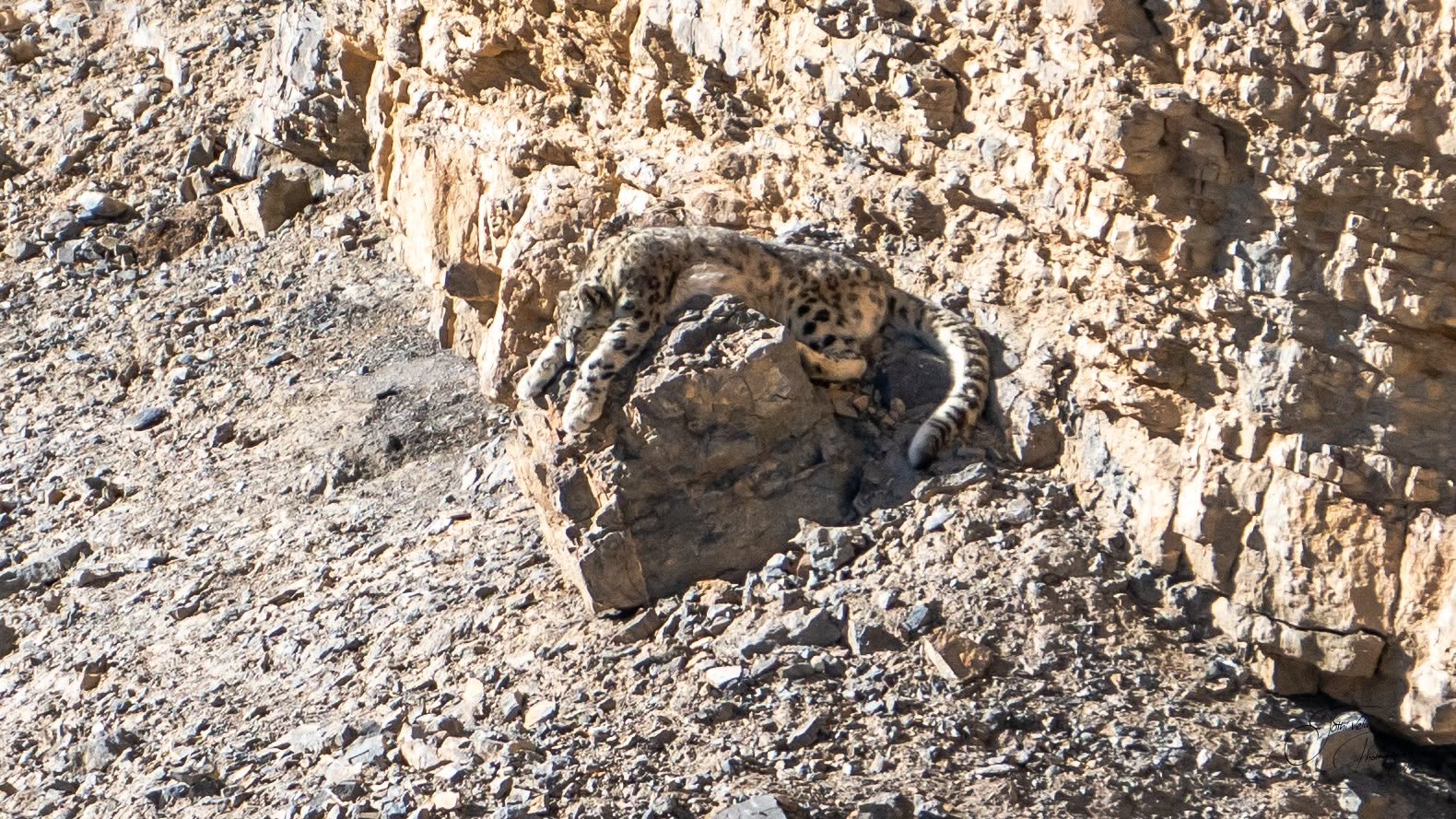
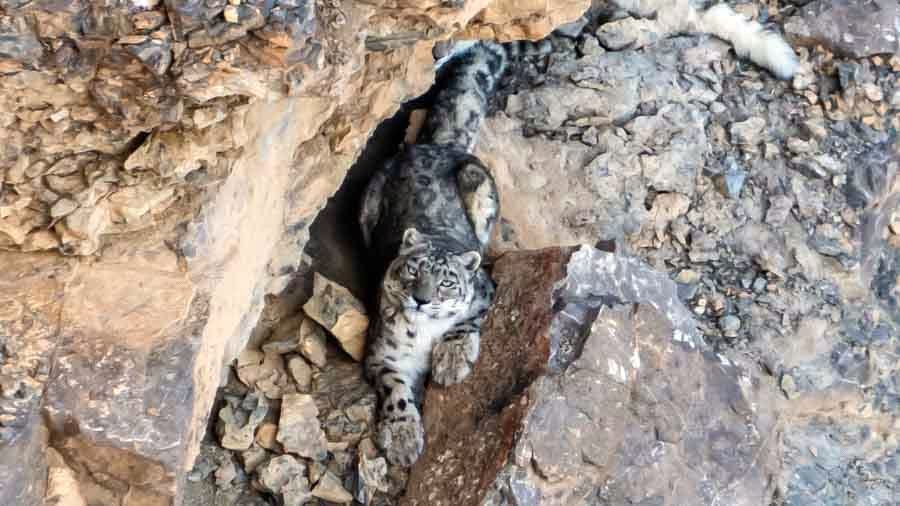
I kept my finger on the shutter, capturing those eyes frame after frame. The Himalayas have a way of turning the unpredictable into the unforgettable. They call the snow leopard the “Ghost of the Mountains” because it can vanish into the rock in seconds, its coat matching the terrain almost perfectly.
But that day, it wasn’t a ghost.
It was real — alive, present, and looking straight back at me through the lens.
Two eyes I know I’ll carry with me for the rest of my life.
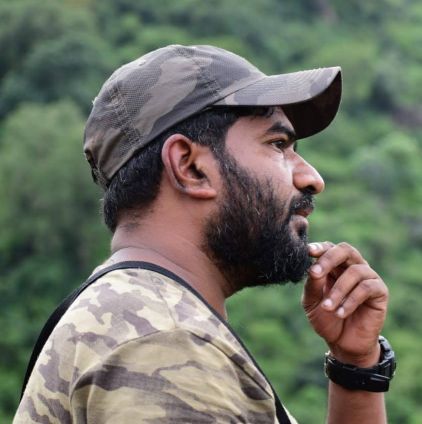
Jothi is a wildlife photographer and documentary filmmaker dedicated to capturing the immense diversity of wildlife and birds of India. After 14 years in IT — working across Oracle, Big Data, and Cybersecurity roles in India and the U.S. — he stepped away from the corporate world to pursue a deeper calling: documenting the wildlife, people, places, and cultures that make up India’s hidden corners.
His journey has taken him from the monasteries of Tawang to the tribal villages of Odisha, from the mountains of Ladakh to the green hills of Kanthaloor. Through years of self-driven travel, he has built a body of work centered on rural and tribal India, using photography and film as tools to preserve culture, evoke emotion, and raise awareness.
Jothi has documented stories from Leh, Tawang, Ziro, Kaziranga, Sikkim, Cherrapunji, and tribal regions across Odisha and Tamil Nadu, and has produced short documentaries on eco-livelihoods, tribal education, and rural women’s empowerment. He collaborates with NGOs, tourism boards, and ethical travel brands to amplify voices and stories that often go untold, and leads workshops on ethical photography and storytelling. His visual work has been featured in magazines, tourism campaigns, and digital media.
Through his journeys across the Himalayas, the Western Ghats, and remote tribal communities, he discovered that every landscape has a story and every person has a voice worth preserving.
Beyond photography, he believes in creating meaningful social impact. He has actively supported initiatives that empower tribal communities, promote environmental conservation, and encourage sustainable living.
For him, the Himalayas are not merely mountains or just a travel destination. They are places that have become part of his soul, just as the Kurinji landscapes of the Western Ghats will always be his first home.
He believes that photographs are more than memories—they are timeless stories that continue to speak long after the moment has passed.
Quoting one of his favourite quote: “I don’t travel to collect destinations. I travel to collect stories, preserve memories, and celebrate humanity.”
Leave a Reply